

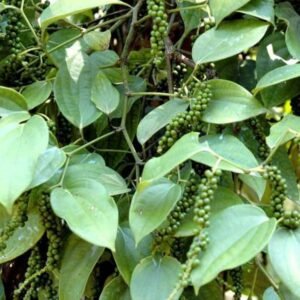
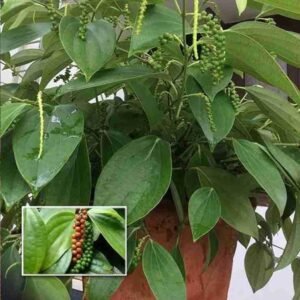
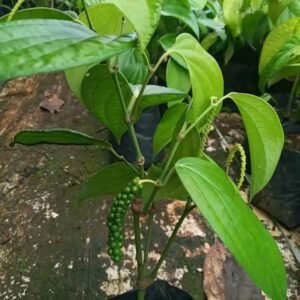
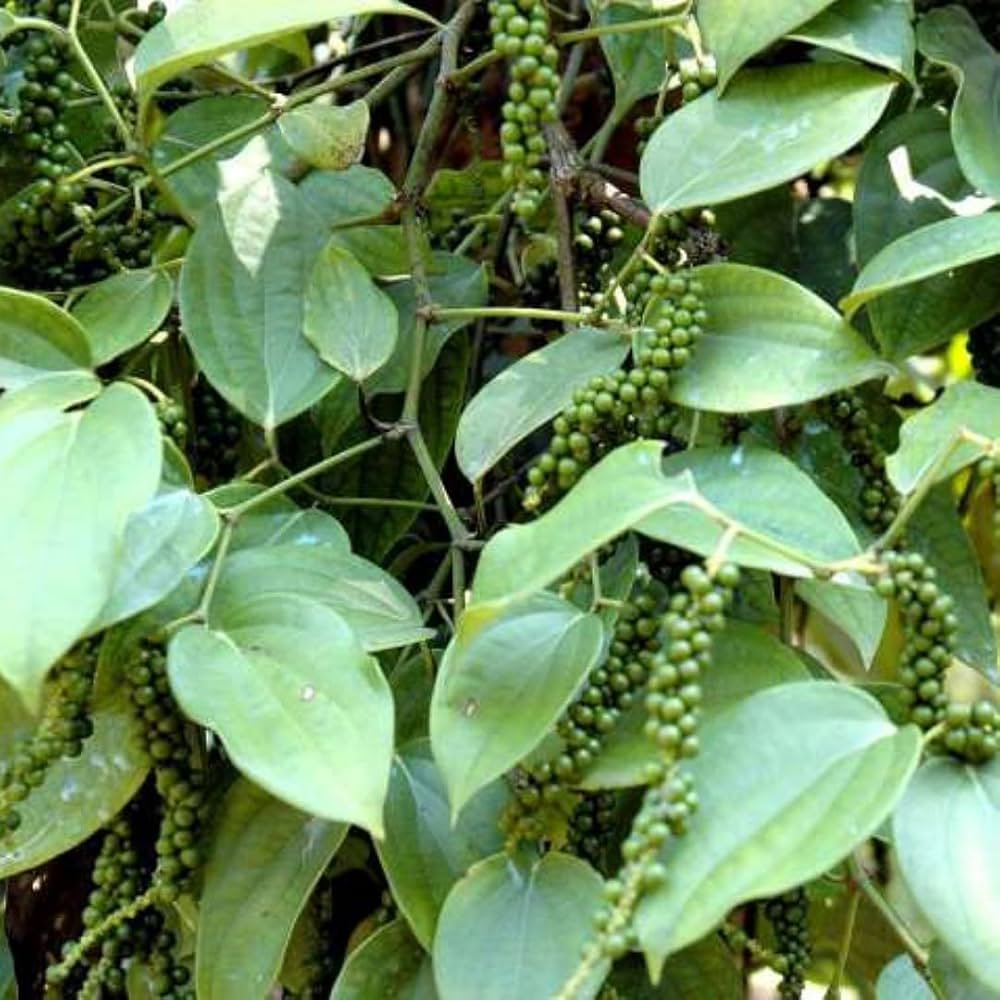
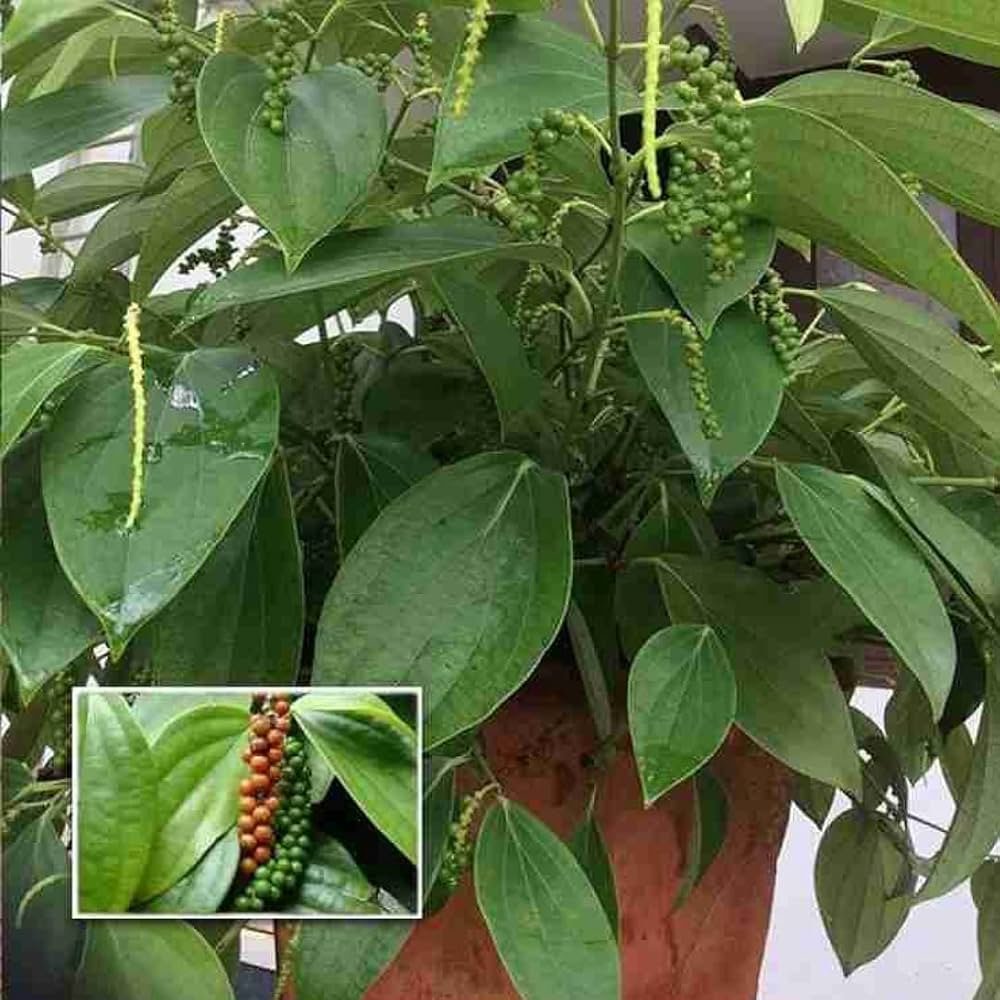
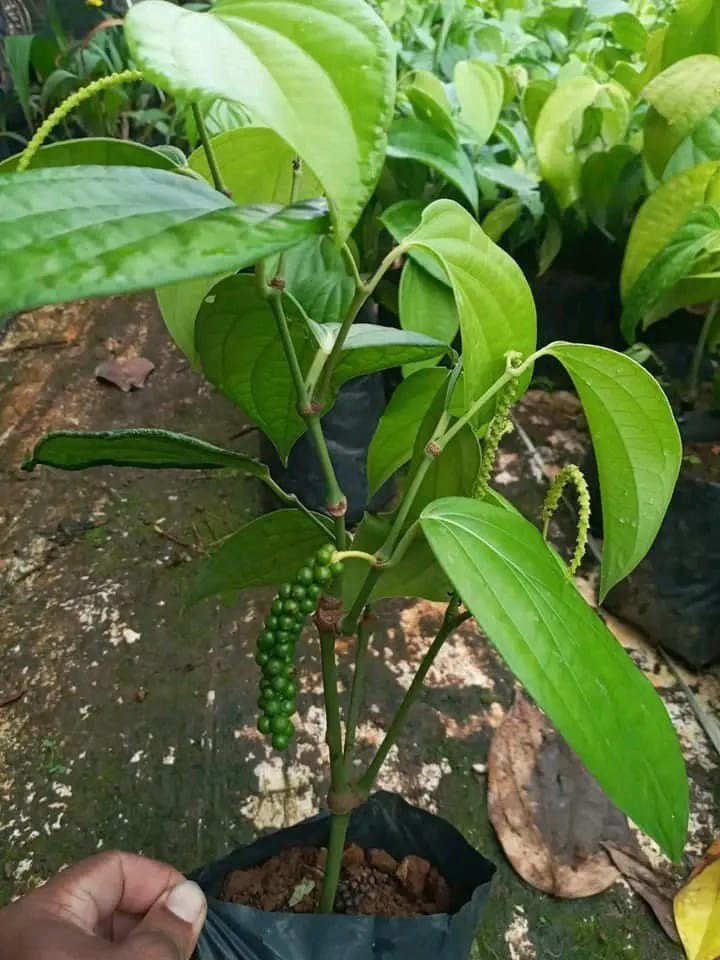
A Hybrid black pepper plant is grown by joining a high-yielding black pepper variety onto a vigorous rootstock. It is cared for almost the same way as a regular black pepper vine.
1. Planting
- Use a 12–18 inch pot with drainage holes, or plant directly in the ground.
- Soil mix:
- 40% garden soil
- 30% compost or well-rotted cow manure/vermicompost
- 20% coarse sand
- 10% cocopeat or leaf mold
- Soil pH: 5.5–6.5 (slightly acidic).
2. Light
- Provide bright filtered sunlight or morning sun.
- Avoid strong afternoon sun, especially in summer.
- Black pepper naturally grows under partial shade.
3. Watering
- Keep the soil consistently moist, not soggy.
- Water when the top 2–3 cm of soil starts to dry.
- During monsoon, reduce watering if the soil stays wet.
4. Support
- Give the vine a pole, bamboo stick, moss pole, or trellis.
- Tie young shoots gently as they grow upward.
5. Fertilizer
Feed every 30–45 days:
- 2–3 handfuls of vermicompost or compost.
- Once every 2 months, add a small amount of neem cake.
- During active growth, apply a balanced NPK fertilizer (such as 19:19:19) at a light dose once a month if desired.
6. Humidity
- Prefers 60–80% humidity.
- In dry weather, mist the leaves in the morning.
7. Temperature
- Best growth: 20–35°C.
- Protect from frost and temperatures below 10°C.
8. Pruning
- Remove weak, dead, or diseased shoots.
- Trim excessively long vines to encourage branching.
9. Flowering & Fruiting
- Grafted plants often produce earlier than ordinary cuttings.
- Flower spikes usually appear after the vine is well established.
- Pepper berries are harvested when a few berries on the spike start turning red, then dried to make black pepper.


Reviews
There are no reviews yet.