

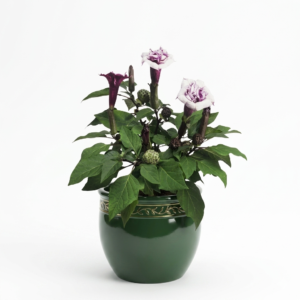
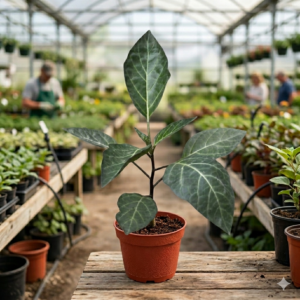
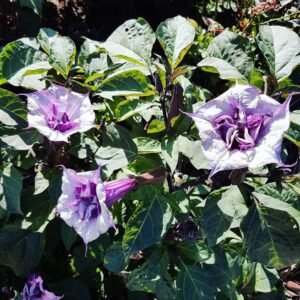
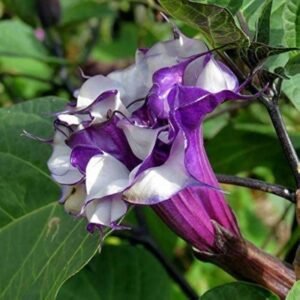
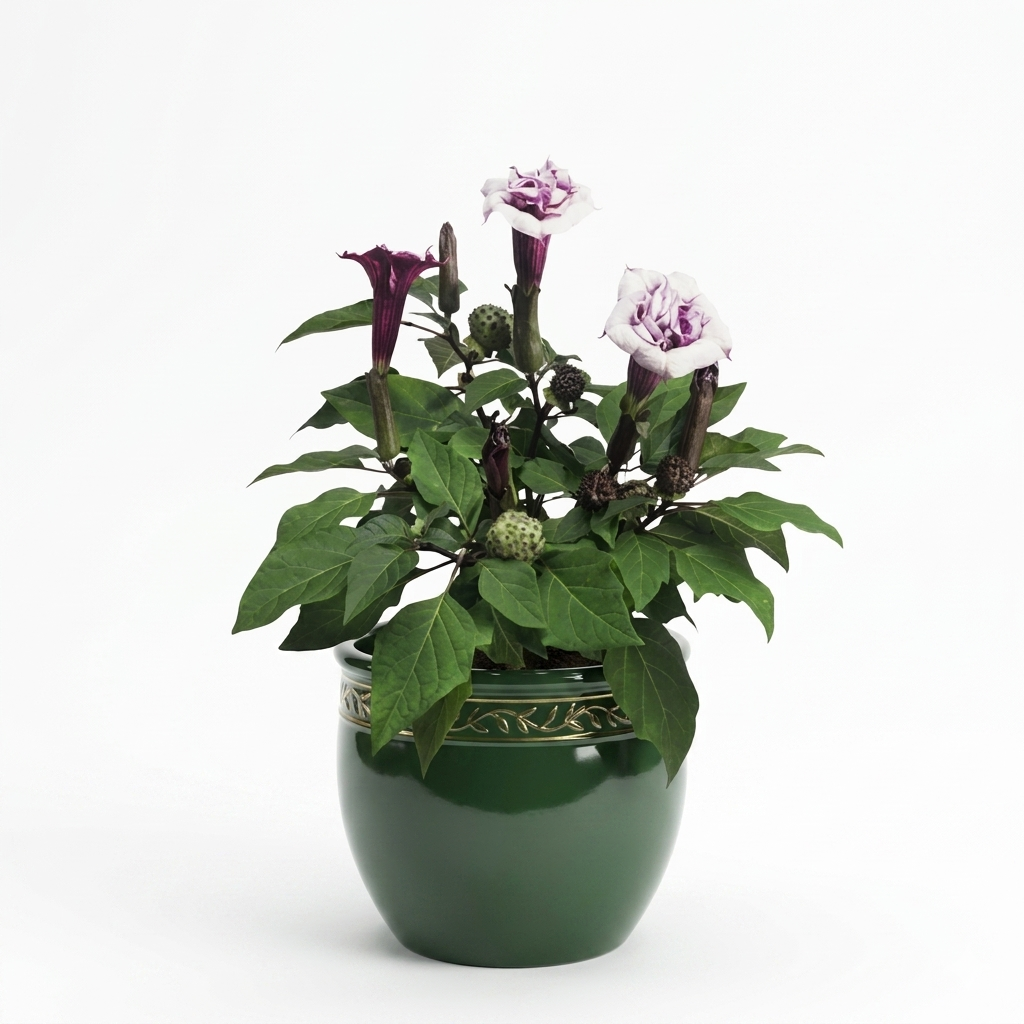
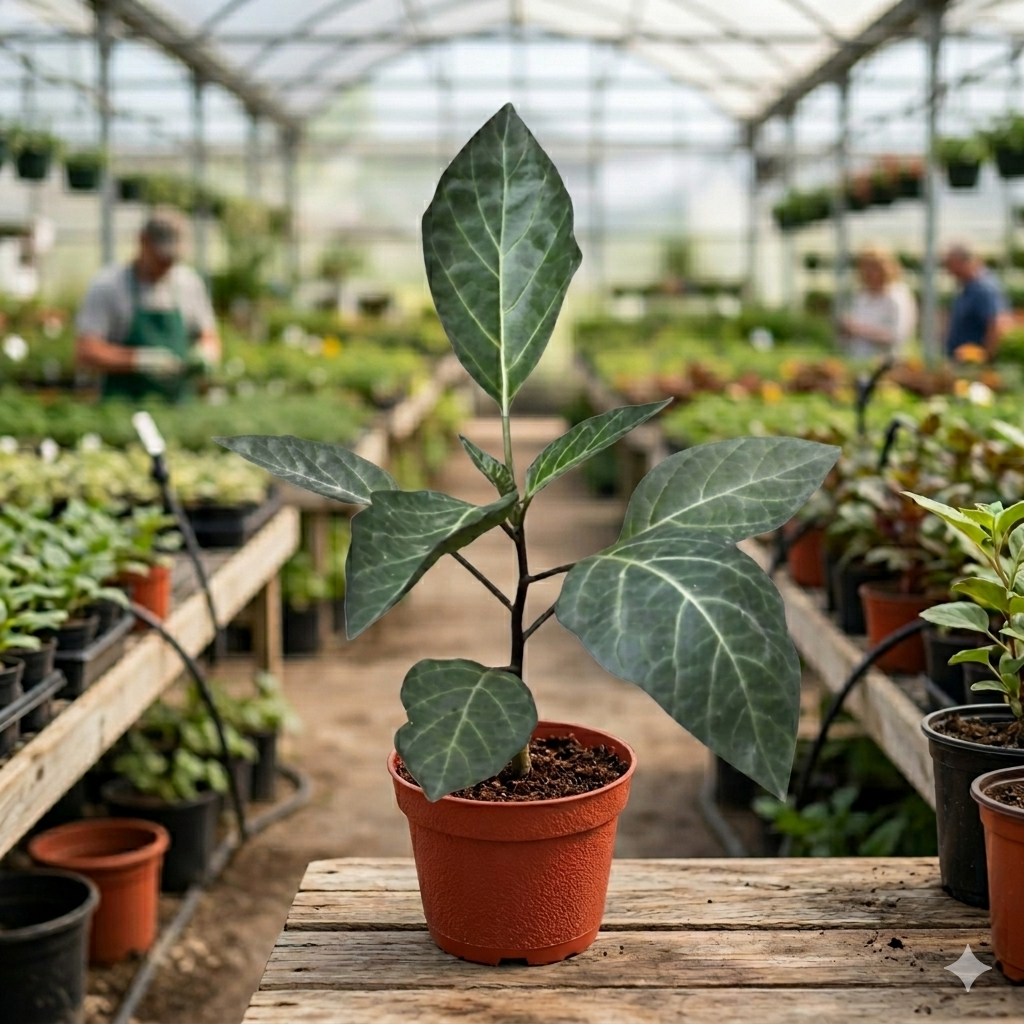

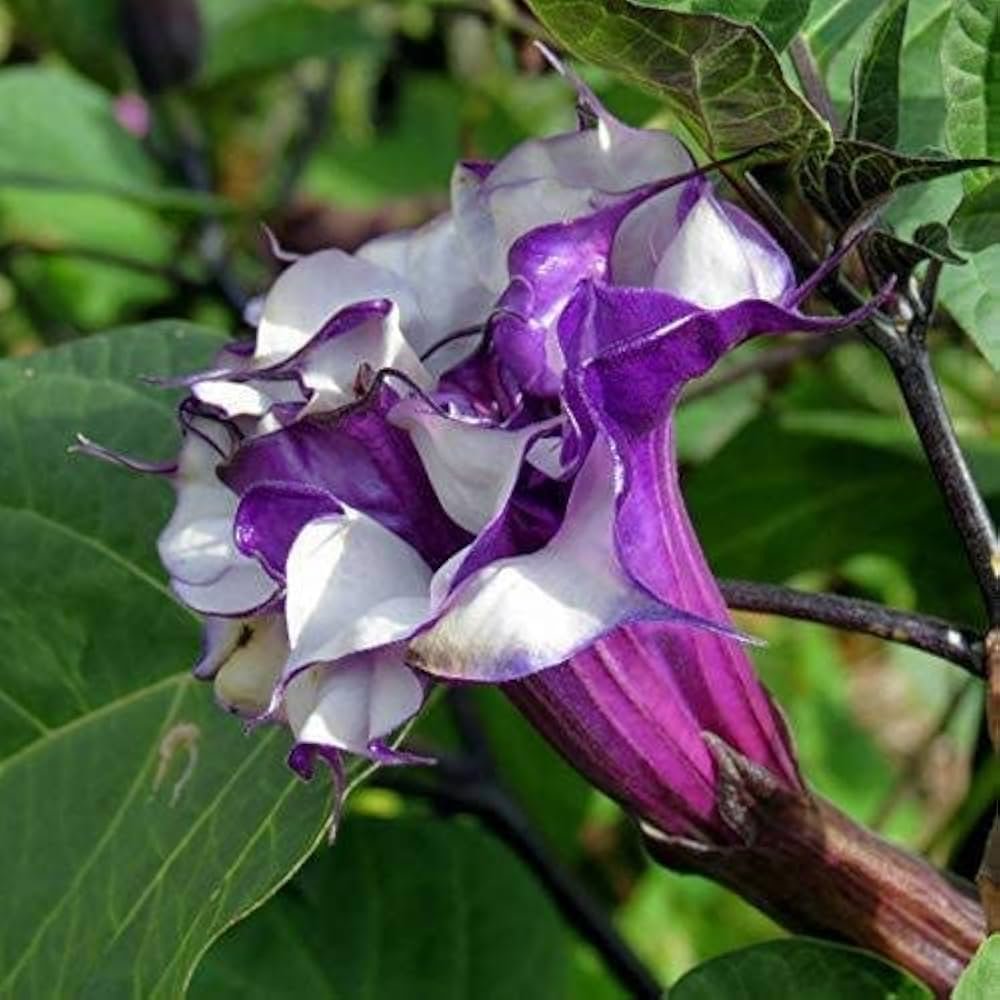
Black Dhatura is a striking ornamental plant, but it is also highly poisonous. Every part—especially seeds and flowers—contains toxic compounds such as scopolamine and atropine. It should never be eaten or used as a home remedy without medical supervision.
How to grow black dhatura
- Sunlight: Needs full sun (at least 6–8 hours daily).
- Soil: Well-draining sandy or loamy soil works best.
- Watering: Keep soil lightly moist while young; once established, water when the topsoil dries.
- Climate: Likes warm weather; grows well in tropical/subtropical areas.
- Propagation: Usually grown from seeds. Sow in spring or early monsoon.
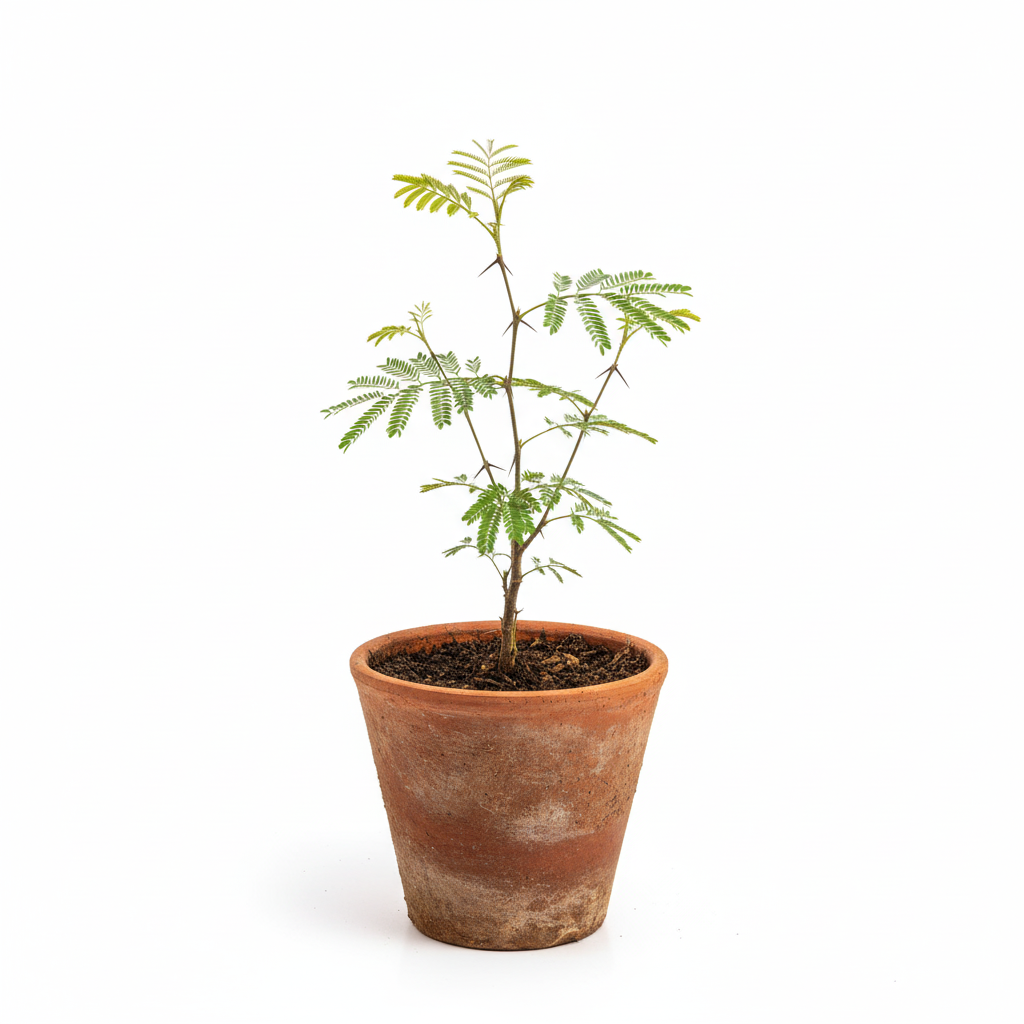
- Pot growing: Use a large pot with drainage holes.
- Fertilizer: Light compost or balanced fertilizer once a month during active growth.
- Pruning: Remove dead flowers and weak branches to encourage blooming.
- Pests: Watch for aphids, mites, and root rot from overwatering.
Benefits (with caution)
- Traditionally used in Ayurveda:
- asthma and cough relief (processed leaves),
- pain relief,
- anti-inflammatory uses,
- some skin conditions.





Rajsingh chouhan (verified owner) –
I received a very good product.