

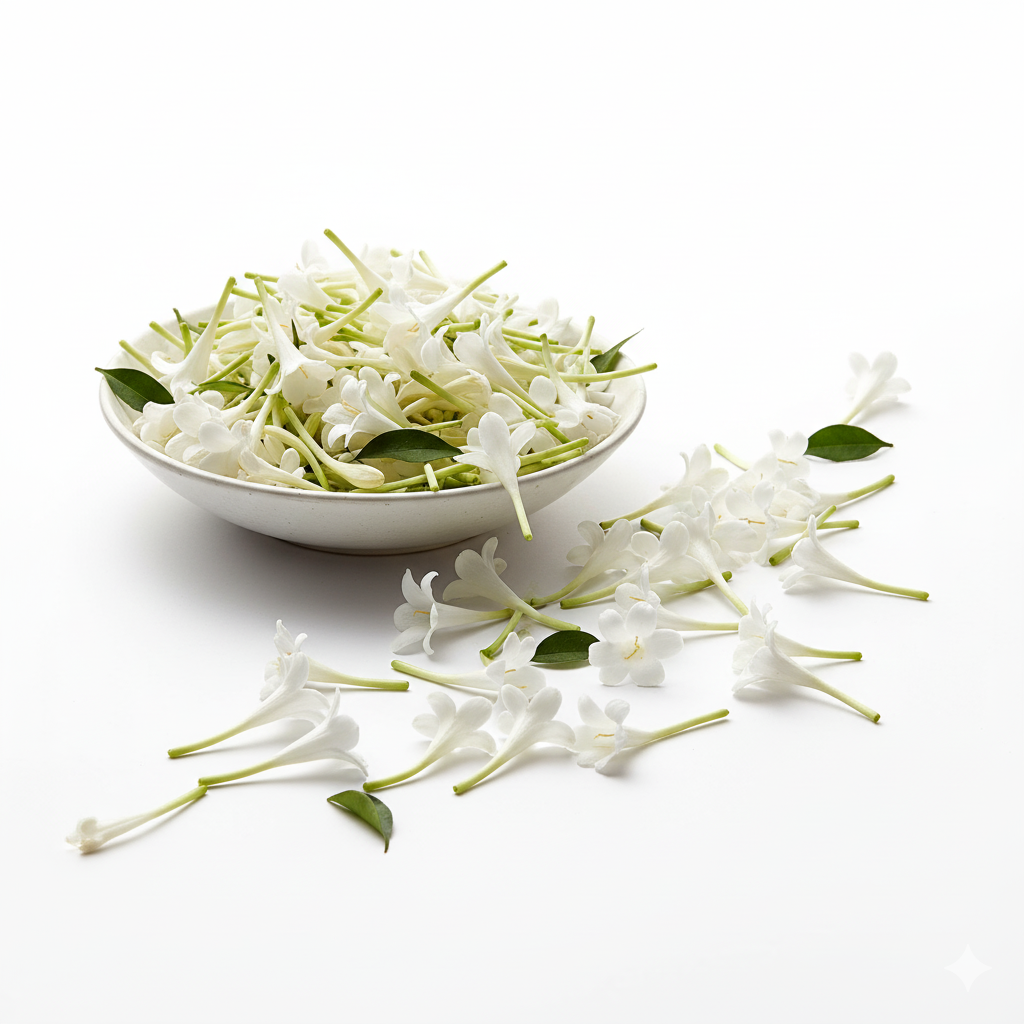
Rajni Gandha (Tuberose) flowers, which are commonly used in Hindu pujas and spiritual rituals
About Rajni Gandha (Tuberose)
- Sanskrit/Local Names: Rajnigandha, Tuberose
- Symbolism: Purity, devotion, love, and spiritual upliftment
- Fragrance: Strong, sweet, and calming; believed to attract positive energy
- Occasions: Daily puja, festivals, weddings, and special prayers
Ways to Use Rajni Gandha in Puja
1. Offering to Deities
- Fresh flowers: Place the blooms in front of the deity or make a small garland.
- Garlands: Thread the flowers to make a garland for idols or photos of gods/goddesses.
- Loose flowers: Scatter around the deity’s altar for fragrance and decoration.
2. Decorating the Puja Altar
- Place fresh Rajni Gandha flowers in a small vase on the altar.
- Combine with other flowers like marigold, jasmine, or rose for a colorful, fragrant arrangement.
3. Making Floral Strings or Torans
- Thread multiple Rajni Gandha flowers to make floral strings (toran) to hang around the puja area.
- Helps in creating an aura of sanctity and fragrance.
4. Offering in Water (Pushpa Jal)
- Add petals to a small bowl of water as an offering (pushpa jal).
- Can be poured over idols if required during rituals like abhishekam.
5. Bed of Flowers
- Lay the flowers on the floor around the altar or deity during special ceremonies.
- Often used in wedding or festival decorations.
6. Fragrance in Puja
- Rajni Gandha flowers are naturally fragrant and believed to enhance meditation.
- Simply keeping a few flowers near the idol or on the altar spreads a calming aroma.





Reviews
There are no reviews yet.