

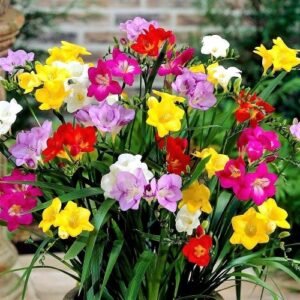
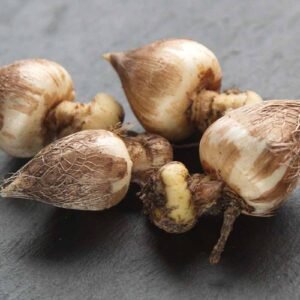
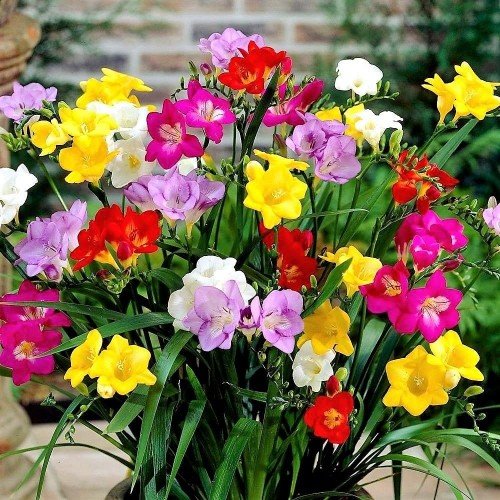
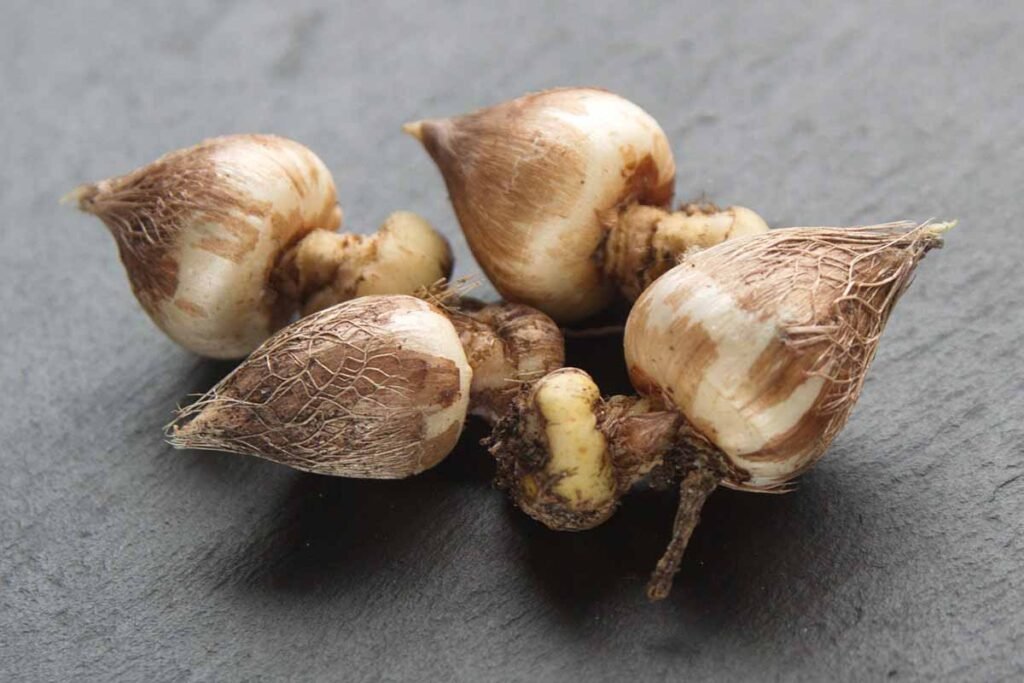
Growing freesia from bulbs (technically corms) is straightforward if you provide cool temperatures during early growth and plenty of sunlight.
1. Choose healthy corms
- Buy firm, plump corms without mold or soft spots.
- Larger corms usually produce more flowers.
2. Planting time
- Cool climates: Plant in spring after the last frost.
- Warm winter climates (USDA Zones 9–10): Plant in autumn for winter and spring blooms.
- Tropical climates: Plant during the coolest part of the year.
3. Prepare the soil
Freesias prefer:
- Well-draining soil
- Rich in organic matter
- Slightly acidic to neutral (pH 6.0–7.0)
Mix compost into the soil and add coarse sand if drainage is poor.
4. Plant the corms
- Plant 5–8 cm (2–3 inches) deep.
- Space them 5–8 cm (2–3 inches) apart.
- Place the pointed end facing upward.
5. Sunlight
- Provide 6–8 hours of sunlight daily.
- In very hot regions, give afternoon shade.
6. Watering
- Water thoroughly after planting.
- Keep the soil lightly moist while shoots develop.
- Avoid waterlogging, which can rot the corms.
- Reduce watering after flowering.
7. Temperature
Freesias bloom best when:
- Day: 15–20°C (59–68°F)
- Night: 7–13°C (45–55°F)
High temperatures may reduce flowering.
8. Fertilizer
- Apply a balanced fertilizer (such as 10-10-10 or 5-10-10) every 2–3 weeks once leaves appear.
- Stop feeding after flowering.
9. Support
Flower stems can become tall and floppy. Use small stakes or a ring support if needed.
10. After flowering
- Remove spent flowers.
- Leave the leaves until they turn yellow naturally—they replenish the corm for next season.
- Once the foliage has died back, lift the corms if your winters are very cold or if the soil stays wet. Store them in a cool, dry place until replanting.
Growing in pots
- Use a pot at least 20 cm (8 inches) deep with drainage holes.
- Plant 5–10 corms together for a fuller display.
- Use a free-draining potting mix.

Reviews
There are no reviews yet.