


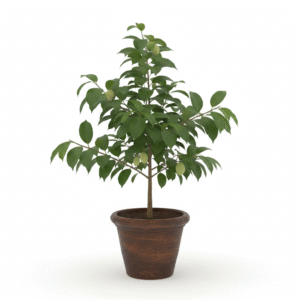
The Usthikaya / Turkey Berry / Kundene Kayi plant (botanical name: Solanum torvum) is a hardy, semi-wild shrub in the nightshade family (Solanaceae), related to eggplant (brinjal). It’s grown for its small, green berries used in South Indian and Southeast Asian cuisines.
🌱 Quick Overview
- Botanical name: Solanum torvum
- Common names: Turkey Berry, Usthikaya (Telugu), Kundene Kayi (Kannada), Sundaikkai (Tamil), Bhankatiya (Hindi)
- Type: Perennial shrub (can live 3–5 years)
- Height: 1–3 meters
- Climate: Tropical to subtropical (warm, humid conditions preferred)
🌞 Light Requirements
- Prefers full sunlight (6–8 hours/day) for best growth and fruiting.
- If grown indoors, place it near a south- or west-facing window or use a grow light.
- It can survive partial shade, but fruit yield may reduce.
💧 Watering
- Water moderately — keep soil slightly moist but not soggy.
- Let the top 1 inch (2–3 cm) of soil dry out before watering again.
- Overwatering causes root rot, while underwatering leads to flower or fruit drop.
💡 Tip: Water less frequently during the rainy season or in high humidity.
🌡️ Temperature & Humidity
- Ideal range: 20–32 °C (68–90 °F)
- Cannot tolerate frost or cold drafts — bring indoors if temperatures drop below 15 °C (59 °F).
- Likes moderate humidity; mist occasionally if indoors in dry conditions.
🌿 Soil & Potting
- Use well-draining, fertile soil.
- Ideal mix (for pots):
- 50% garden soil or composted loam
- 25% coco peat or leaf mold
- 25% sand or perlite for drainage
- pH: Slightly acidic to neutral (6.0–7.0)
If growing in a pot:
- Choose a large container (at least 12–16 inches deep) because it develops strong roots.
- Make sure the pot has drainage holes.
🌸 Fertilizing
- Apply organic compost or cow dung manure every 3–4 weeks during the growing season.
- You can also feed a balanced NPK (10-10-10) fertilizer monthly.
- Once flowering begins, switch to phosphorus-rich fertilizer (like bone meal or seaweed extract) to promote fruiting.
🌺 Flowering & Fruiting
- Flowers appear in clusters of small white blooms, followed by green berries.
- Fruits mature in 3–4 months after planting.
- You can harvest when the berries are firm and green (before they turn yellowish).
Regular harvesting encourages more flowering and fruiting.
✂️ Pruning & Maintenance
- Prune leggy or damaged branches to maintain shape and airflow.
- Remove any suckers growing near the base to promote main stem strength.
- Watch for thorny branches — handle with gloves.
🪲 Pests & Diseases
Common problems include:
| Problem | Symptoms | Solution |
|---|---|---|
| Aphids / Whiteflies | Sticky residue, curling leaves | Spray neem oil or insecticidal soap weekly |
| Spider mites | Yellow speckled leaves | Increase humidity, wipe leaves with damp cloth |
| Fruit borers | Holes in berries | Use neem oil spray or remove affected fruits |
| Fungal wilt / root rot | Sudden wilting | Improve drainage, avoid overwatering |
Rotate soil or pots annually to prevent pest buildup.
🌾 Propagation
- Easiest method: From seeds
- Extract seeds from ripe berries.
- Dry them for 1–2 days.
- Sow in moist seed-starting mix; cover lightly with soil.
- Germination in 1–2 weeks in warm conditions (25–30 °C).
- Transplant seedlings after 4–6 leaves appear.
- Can also be propagated from semi-hardwood stem cuttings, though seed method is more reliable.
🪴 Indoor Growing Tips
If growing indoors:
- Use bright artificial light if sunlight is limited.
- Ensure good air circulation.
- Hand-pollinate flowers with a soft brush if no pollinators are present.
🍃 Harvesting & Use
- Harvest berries when green and firm — too ripe berries become bitter.
- Used in curries, chutneys, and traditional for digestion


Reviews
There are no reviews yet.