

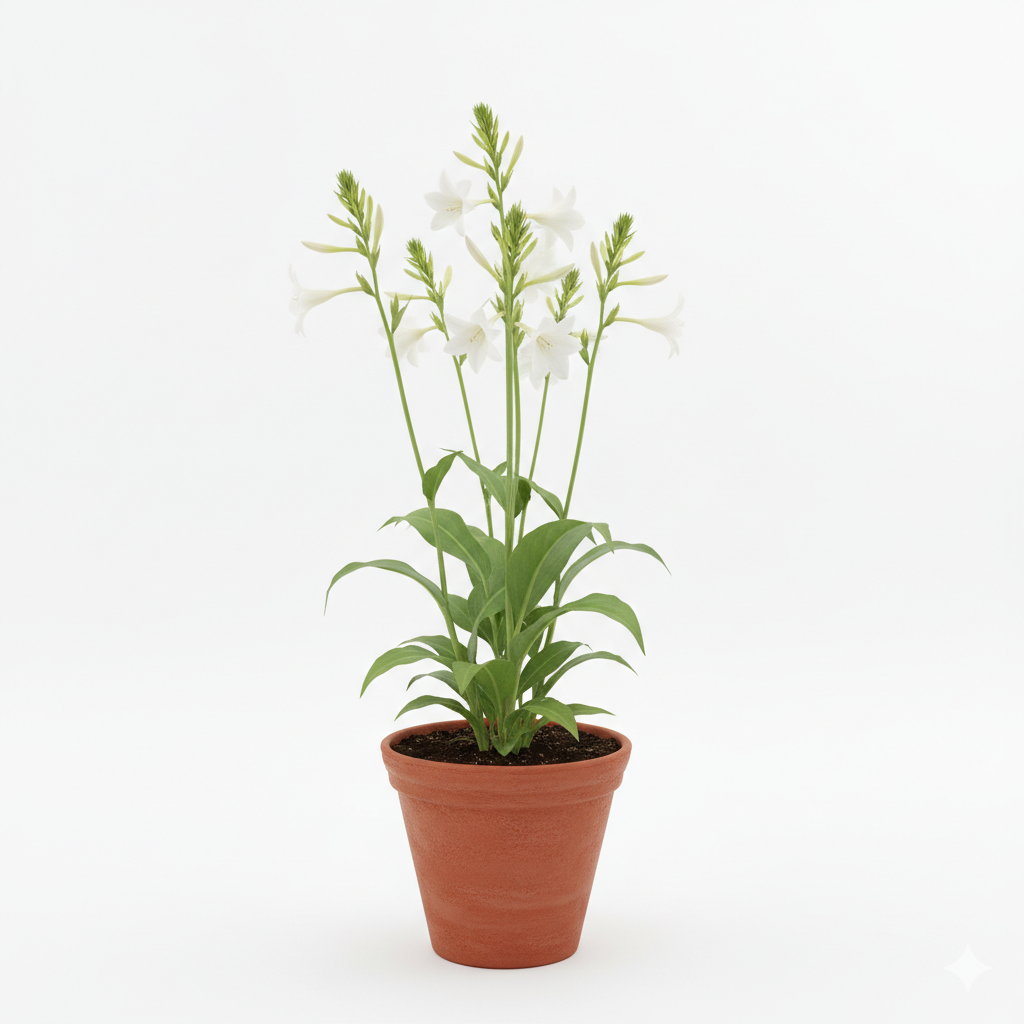
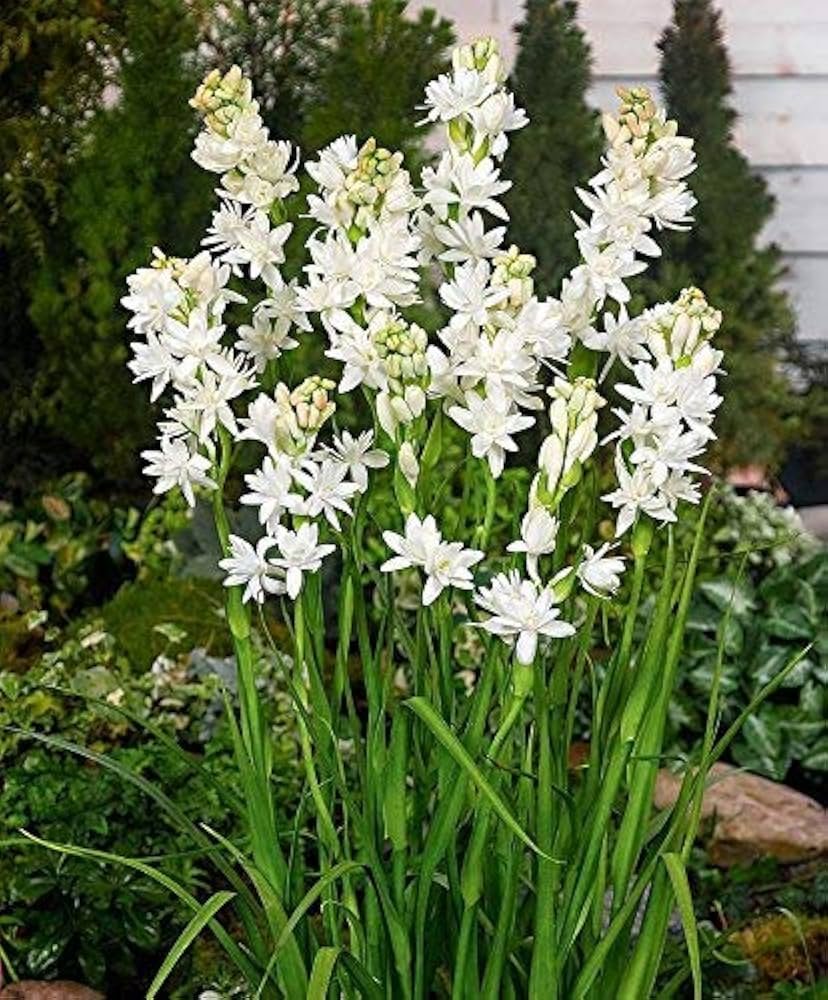
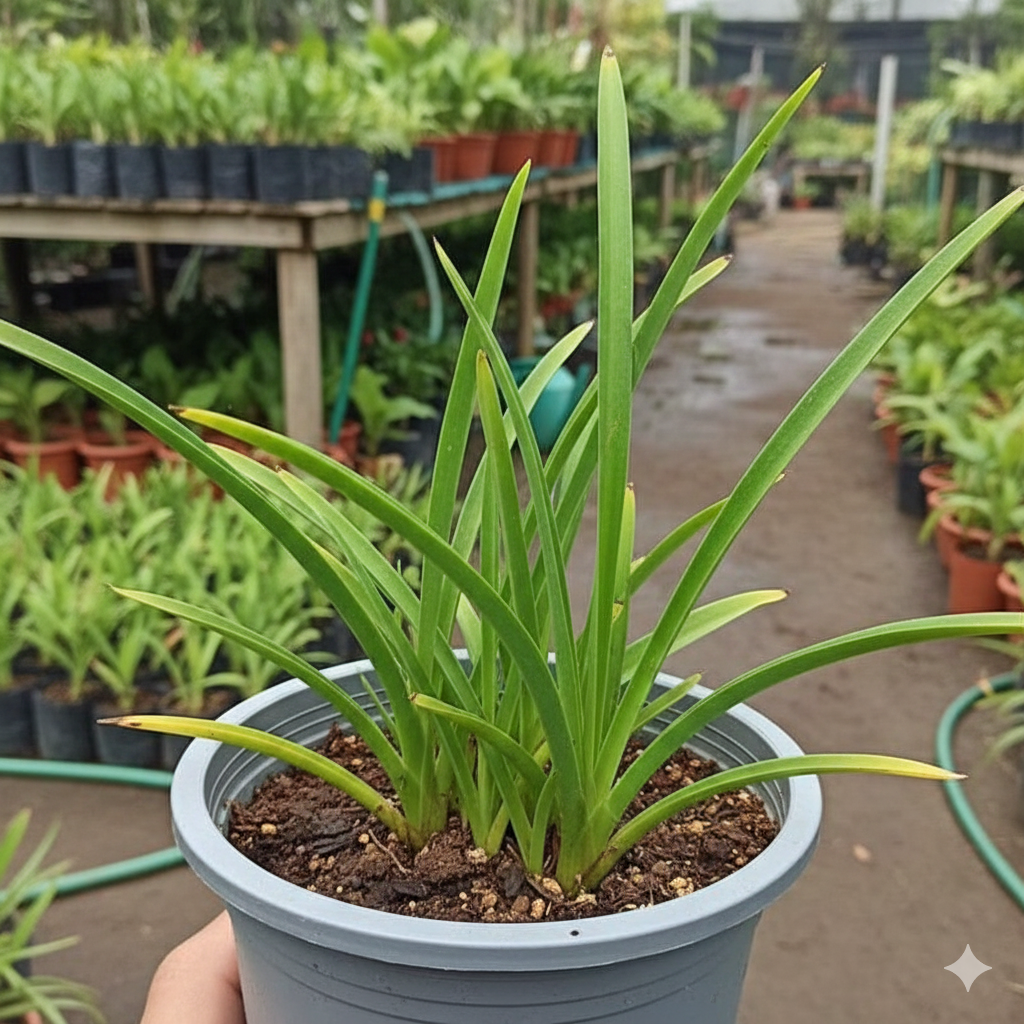
🌿 1. About the Plant
- Botanical name: Polianthes tuberosa
- Common names: Rajnigandha, Nishigandha, Tuberose
- Type: Perennial, bulbous plant
- Height: 2–3 feet
- Flower color: White (sometimes pink-tinged)
- Fragrance: Strong, sweet, especially at night 🌙
🌞 2. Sunlight
- Needs full sunlight (at least 5–6 hours/day).
- Can tolerate partial shade, but flowers best in full sun.
☀️ More sun = stronger scent + more blooms.
🌾 3. Soil
- Prefers light, well-draining, sandy-loam soil.
- Ideal potting mix:
👉 2 parts garden soil + 1 part sand + 1 part compost or cow dung manure. - Avoid waterlogging — bulbs rot easily in soggy soil.
🌱 4. Planting the Bulbs
- Choose healthy, firm bulbs (not soft or moldy).
- Plant bulbs in spring or early summer (March–May).
- Depth: 2–3 inches below the surface.
- Spacing: 6 inches apart (if in ground).
- Water lightly after planting.
💡 Tip: You can also plant them in large pots (10–12 inch deep).
💧 5. Watering
- Keep soil moist, not soggy.
- Water 2–3 times a week during growth and flowering.
- Reduce watering once leaves start drying after bloom.
🍀 6. Fertilizing
- Apply organic compost or cow dung once a month.
- Before flowering, feed with a phosphorus-rich fertilizer (like bone meal or DAP) to boost buds.
- Avoid too much nitrogen — it makes leaves grow instead of flowers.
🌸 7. Flowering
- Blooms appear in 3–4 months after planting.
- Flowers during summer to early autumn (May–September).
- Each spike bears 20–30 tubular white flowers.
- Flowers open from bottom to top, one by one — very fragrant at night.
💡 After flowering, let the leaves dry naturally — they feed the bulb for next season.
✂️ 8. Post-Flower Care
- After blooms fade, cut the flower spike near the base.
- Reduce watering gradually.
- Once leaves turn yellow, dig up the bulbs, dry them for 3–5 days, and store them in a cool, dry place for replanting next year.


Reviews
There are no reviews yet.