

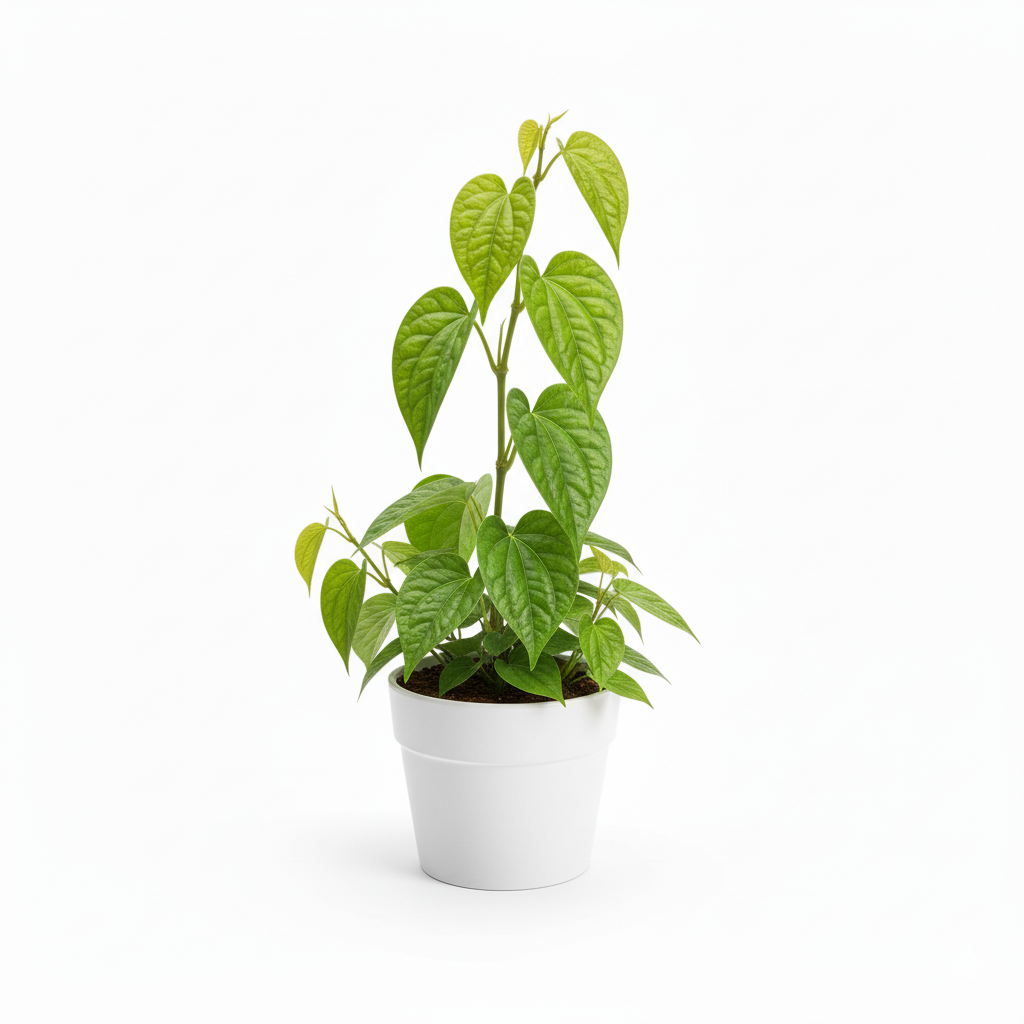
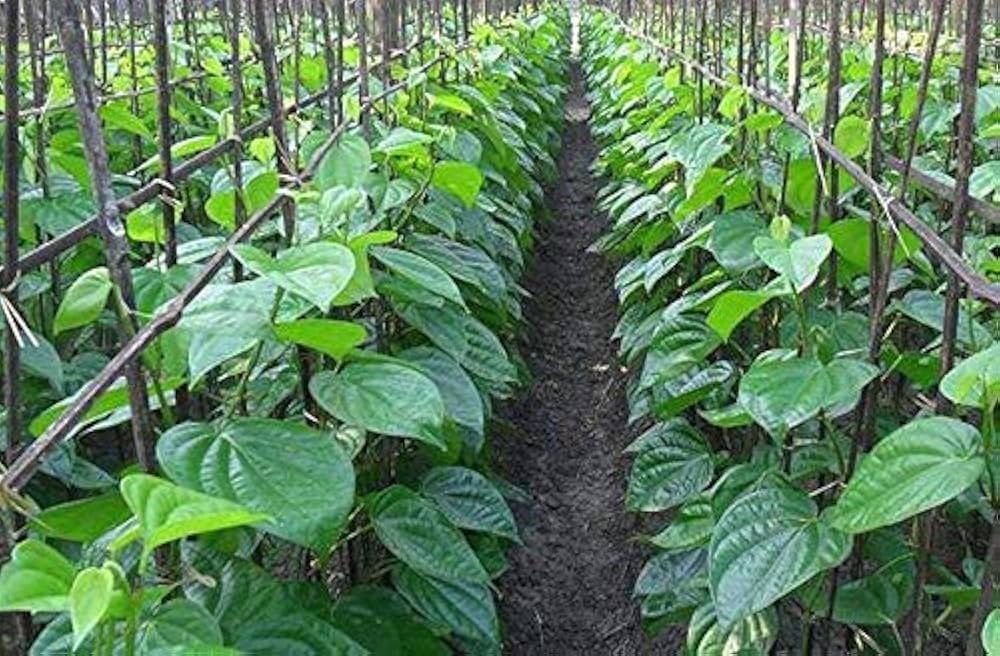
The Medinipur betel leaf plant refers to a traditional and highly regarded variety of betel vine (Piper betle) cultivated in Medinipur (Midnapore) district, located in West Bengal, India. This region is famous for producing high-quality betel leaves, known for their distinct aroma, taste, and texture.
🌿 General Information
- Scientific name: Piper betle
- Family: Piperaceae
- Common local name: Paan pata (পান পাতা)
- Variety: Medinipur Betel Leaf / Medinipur Paan
🏡 Growing Conditions
- Climate: Tropical to subtropical; warm and humid climate suits best.
- Temperature: Ideal range is 15°C to 35°C.
- Soil: Fertile, well-drained loamy soil rich in organic matter; slightly acidic to neutral pH (5.5–7).
- Water: Requires regular watering but no waterlogging.
🌱 Cultivation Practices
- Propagation: Mostly through vine cuttings (stem cuttings of 20–25 cm).
- Planting time: Usually during the onset of monsoon (June–July).
- Spacing: About 45–60 cm between plants.
- Support: Vines are trained to grow on bamboo or wooden stakes (called boroj — traditional betel vine huts).
- Shade: Partial shade is essential; full sunlight can damage leaves.
- Manure: Rich organic compost or cow dung manure is preferred.
🍃 Characteristics of Medinipur Betel Leaf
- Shape: Smooth, heart-shaped with a pointed tip.
- Texture: Soft and glossy surface.
- Taste: Mildly pungent, aromatic, and slightly sweet.
- Shelf Life: Relatively longer due to thicker leaf texture compared to some other varieties.
- Market demand: High — used widely for chewing and religious purposes.


Reviews
There are no reviews yet.