

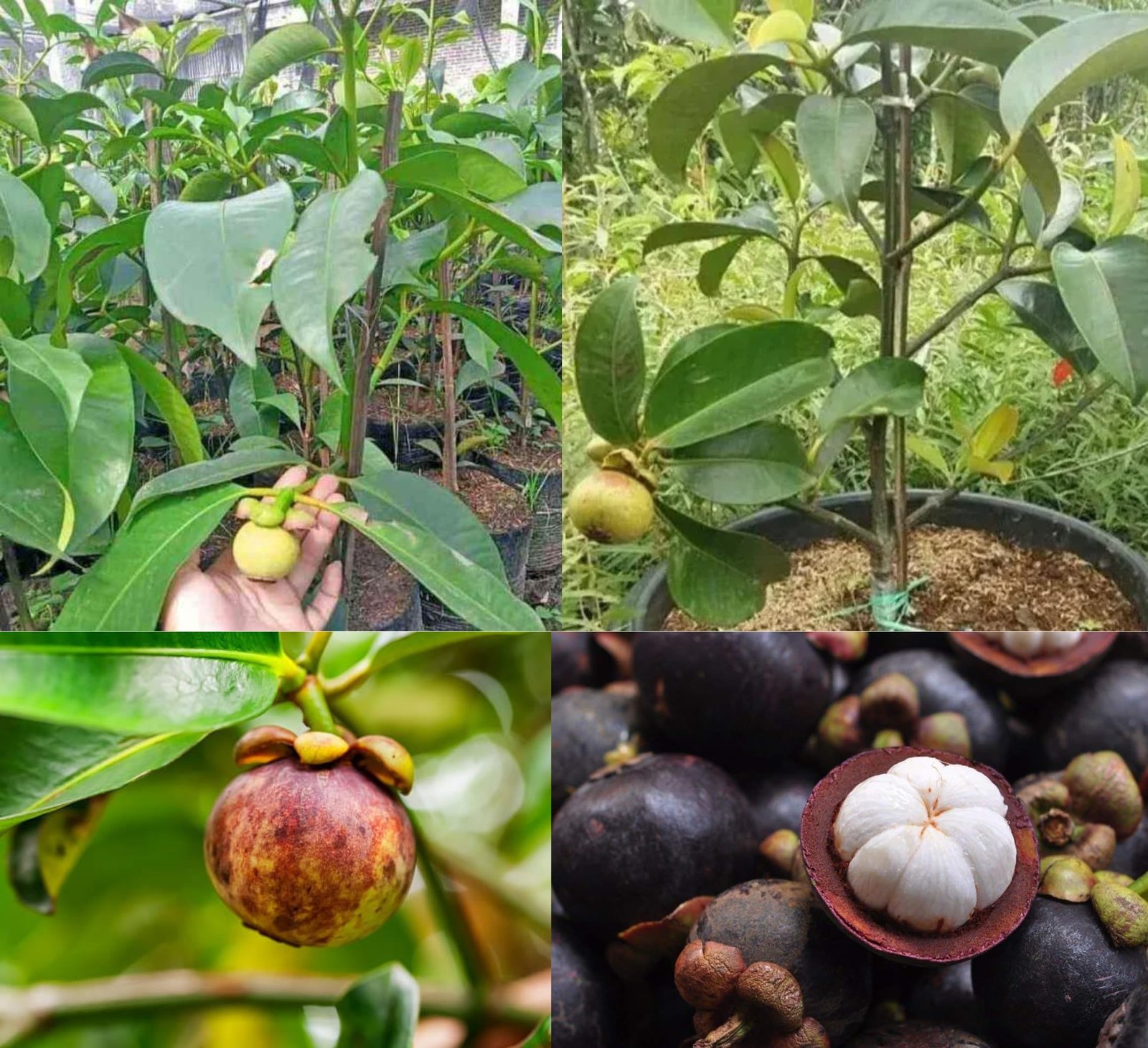
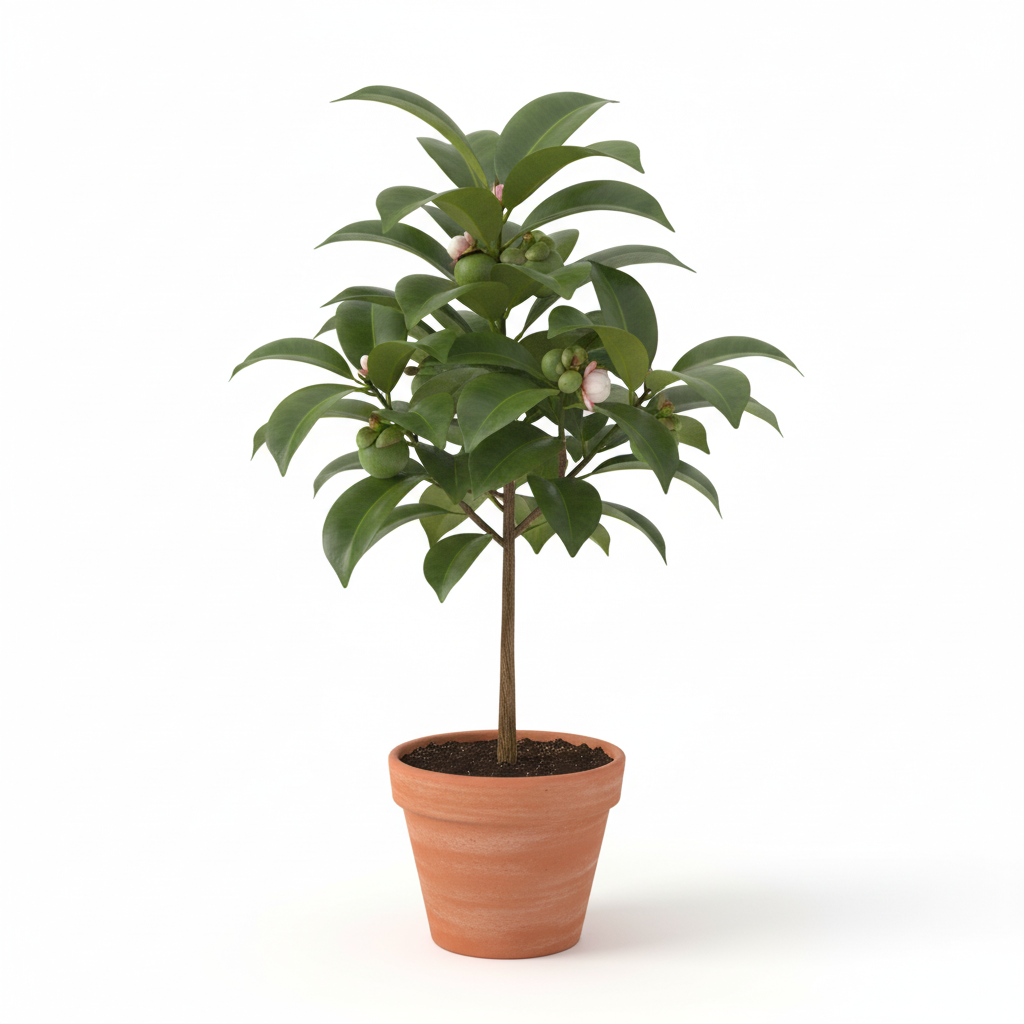
The mangosteen (Garcinia mangostana L.) — often called the “Queen of Fruits” — is a tropical evergreen fruit tree prized for its sweet, tangy, aromatic pulp and nutritional value. It’s native to Southeast Asia and cultivated mainly in Thailand, Indonesia, Malaysia, and India (Kerala, Karnataka, Tamil Nadu).
🟣 Overview of the Mangosteen Plant
| Feature | Description |
|---|---|
| Scientific name | Garcinia mangostana L. |
| Family | Clusiaceae (Guttiferae) |
| Common names | Mangosteen, Purple Mangosteen |
| Native region | Malaysia & Indonesia |
| Type | Tropical evergreen fruit tree |
| Average height | 6–25 meters (depending on conditions) |
| Lifespan | 50–100 years |
| Fruit color | Deep purple rind with soft white segmented flesh |
| Taste | Sweet, slightly tangy, very aromatic |
🌿 Climate & Soil Requirements
Mangosteen is strictly tropical and requires consistent warmth, humidity, and rainfall.
| Factor | Ideal Conditions |
|---|---|
| Temperature | 25–35°C (cannot tolerate below 5–7°C) |
| Rainfall | 1500–2500 mm annually (well-distributed) |
| Humidity | 80% or higher |
| Sunlight | Partial shade for young plants; full sun for mature trees |
| Soil | Deep, fertile, well-drained loam or sandy loam; rich in organic matter |
| Soil pH | 5.5–6.8 |
| Altitude | Up to 800 m above sea level |
⚠️ Important: Mangosteen is very sensitive to drought, strong winds, and waterlogging. Consistent soil moisture is key.
🌱 Propagation
Mangosteen is mostly propagated by seeds, though vegetative propagation (like grafting) is possible but difficult.
| Method | Details |
|---|---|
| Seeds | Recalcitrant (lose viability quickly, within 5 days). Use fresh seeds. |
| Seedlings | Germinate in 20–30 days. Grow in shaded nursery for 1–2 years before transplanting. |
| Grafting / Budding | Rare, since mangosteen is slow-growing and hard to graft successfully. |
🌾 Planting & Spacing
| Aspect | Recommendation |
|---|---|
| Planting time | Beginning of monsoon (June–July) |
| Spacing | 8 × 8 m (approx. 150 trees per hectare) |
| Pit size | 60 × 60 × 60 cm filled with topsoil + compost |
| Mulching | Retains moisture and suppresses weeds |
💧 Watering & Irrigation
- Regular moisture is crucial, especially during the dry season.
- Use drip irrigation for best results.
- Avoid water stagnation — roots are sensitive to rot.
- Mulch heavily with coconut husk, straw, or leaves.
🌸 Flowering & Fruiting
| Stage | Details |
|---|---|
| Flowering begins | 7–10 years after planting (seedling trees) |
| Fruit maturity | 5–6 months after flowering |
| Harvest season (India) | June–August |
| Yield per tree | 200–2,000 fruits per season (depending on age and care) |
⚠️ Mangosteen is slow to mature, but once established, it produces fruits for decades.
🍈 Fruit Characteristics
- Round, 5–8 cm diameter, deep purple rind when ripe.
- Inside: 4–8 white fleshy segments.
- Sweet, slightly acidic, rich in antioxidants (especially xanthones).
🌿 Care and Maintenance
- Fertilizer (per plant/year):
- 1–2 kg organic manure in early years.
- Later, add N:P:K (100:50:100 g/tree) annually.
- Pruning: Only remove dead or diseased branches; mangosteen grows naturally compact.
- Shade management: Young plants need 30–40% shade; gradually expose to full sun as they grow.
- Pests & Diseases: Relatively pest-resistant. Occasionally attacked by fruit borers, scales, or anthracnose — treat with neem oil or copper-based sprays if needed.


Reviews
There are no reviews yet.