

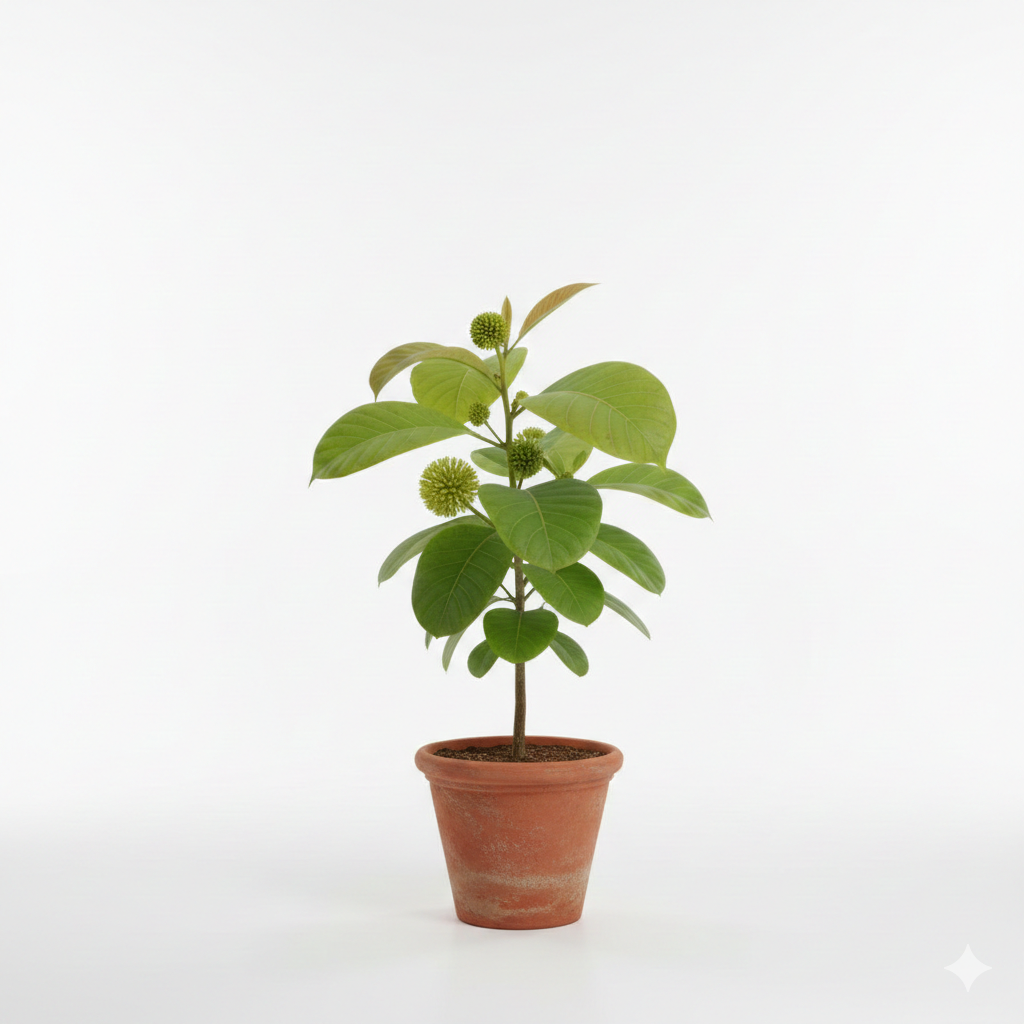
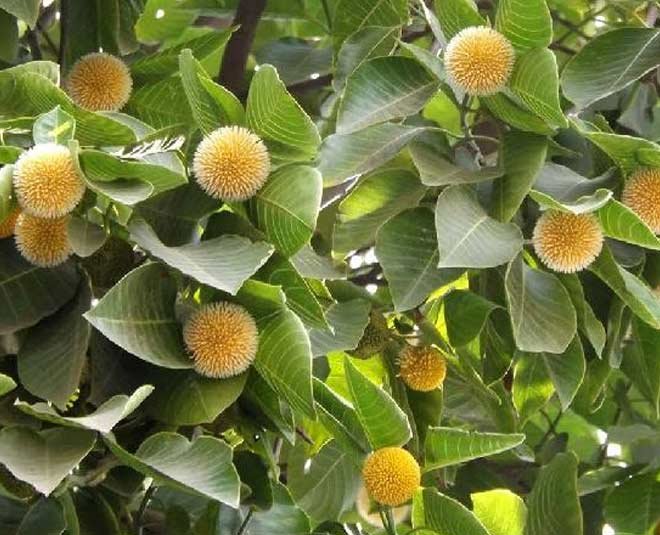

The Kadamba plant, scientifically known as Neolamarckia cadamba, is a large, evergreen tropical tree native to South and Southeast Asia. It is widely recognized for its fragrant, spherical yellow-orange flowers and rapid growth, often reaching up to 45 meters in height in ideal conditions.
Botanical Features
Kadamba trees have broad, glossy green leaves arranged alternately on the branches, a straight greyish-white trunk, and a wide, spreading crown. The distinctive orange-yellow, ball-like flower clusters bloom during the monsoon, attracting bees, butterflies, and birds. The tree also bears edible, slightly tangy fruits commonly enjoyed in parts of Northern India.k
Cultural and Spiritual Significance
This tree holds deep spiritual importance in India, where it is associated with Lord Krishna and Goddess Durga in mythology. Kadamba trees are traditionally planted near temples and sacred spaces, symbolizing love, wisdom, and enlightenment.
Traditional and Practical Uses
Kadamba has notable herbal properties recognized by Ayurveda. Its bark, leaves, and other parts are used for wound healing, treating pain and inflammation, fighting bacterial and fungal infections, and supporting joint and muscle health. Additionally, the tree is valued for timber, paper-making, and as a source of nectar for honey production.


Reviews
There are no reviews yet.