

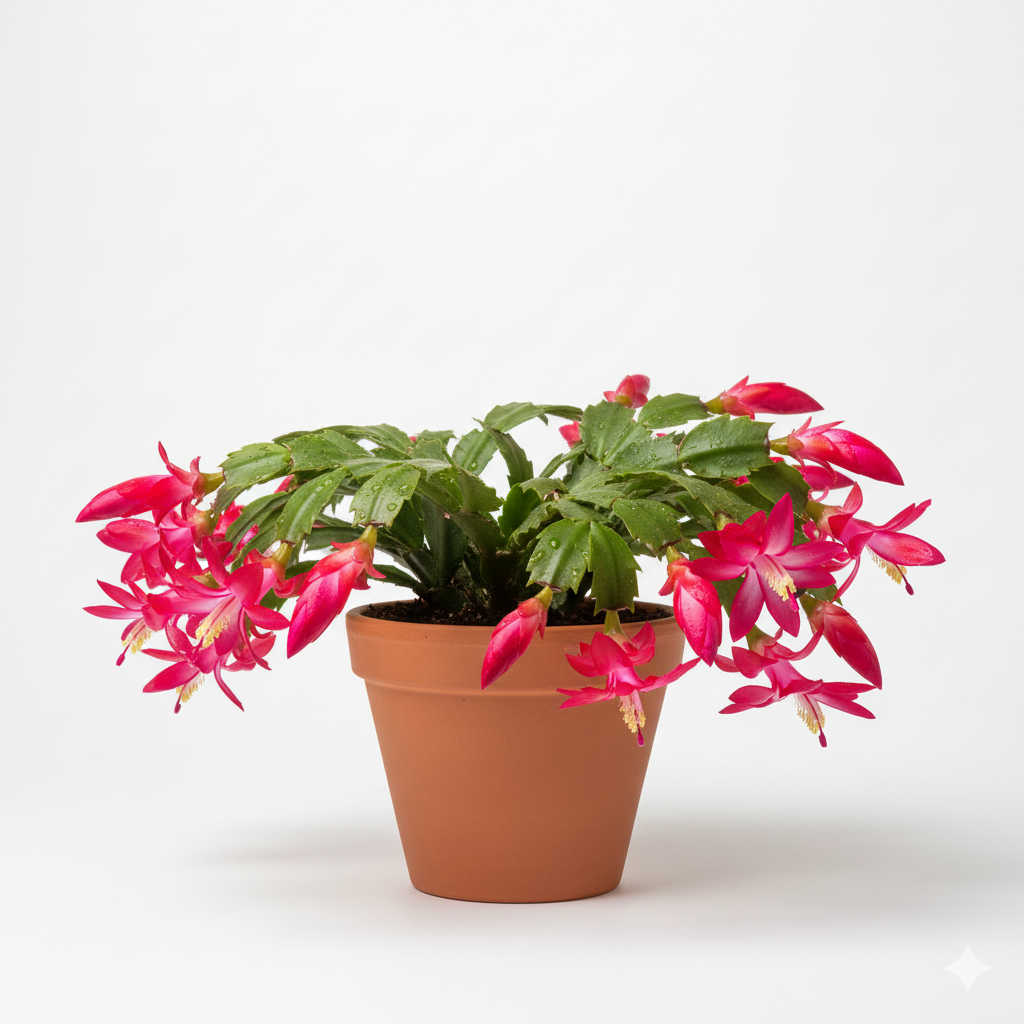
The Christmas cactus (Schlumbergera bridgessii) is a popular, easy-to-grow indoor plant known for its colorful winter blooms — usually in shades of red, pink, white, or purple. Unlike desert cacti, this one is native to tropical rainforests of Brazil, so it thrives in humidity and indirect light.
🌞 Light Requirements
- Ideal: Bright, indirect sunlight (e.g., near an east-facing window).
- Avoid direct sun, especially in summer, as it can scorch the leaves.
- If it’s too dark, it may not bloom.
💧 Watering
- Keep the soil evenly moist but not soggy.
- Water when the top inch (2–3 cm) of soil feels dry.
- Use room-temperature water and make sure the pot has drainage holes.
- Reduce watering slightly after flowering, then resume when new growth starts.
💡 Tip: Overwatering causes root rot — better slightly dry than waterlogged.
🌡️ Temperature & Humidity
- Prefers 60–70°F (15–21°C) during the day and slightly cooler at night.
- Needs high humidity — mist the plant or place the pot on a tray of pebbles and water.
- Avoid cold drafts or sudden temperature changes.
🌱 Soil & Potting
- Use a well-draining mix:
- 2 parts potting soil
- 1 part perlite or orchid bark
- 1 part sand or coco coir
- Repot every 2–3 years, preferably in spring after blooming.
🌼 Feeding
- Feed monthly from spring through early fall with a balanced, water-soluble fertilizer (20-20-20) diluted to half strength.
- Stop fertilizing in late fall before the blooming period.
🌸 Encouraging Blooms
To trigger flowering (usually around late November–December):
- In early fall (Sept–Oct), reduce watering slightly.
- Give the plant 12–14 hours of darkness and cool nights (50–55°F / 10–13°C) for about 6 weeks.
- Once buds appear, return to normal care and move to a bright spot.
- Avoid moving or rotating the plant while buds are forming — they can drop easily.
✂️ Pruning & Propagation
- Prune after blooming by pinching off a few segments to encourage bushier growth.
- Use those segments to propagate:
- Let cuttings dry for 1–2 days.
- Place in moist soil or water until roots form.


Reviews
There are no reviews yet.