

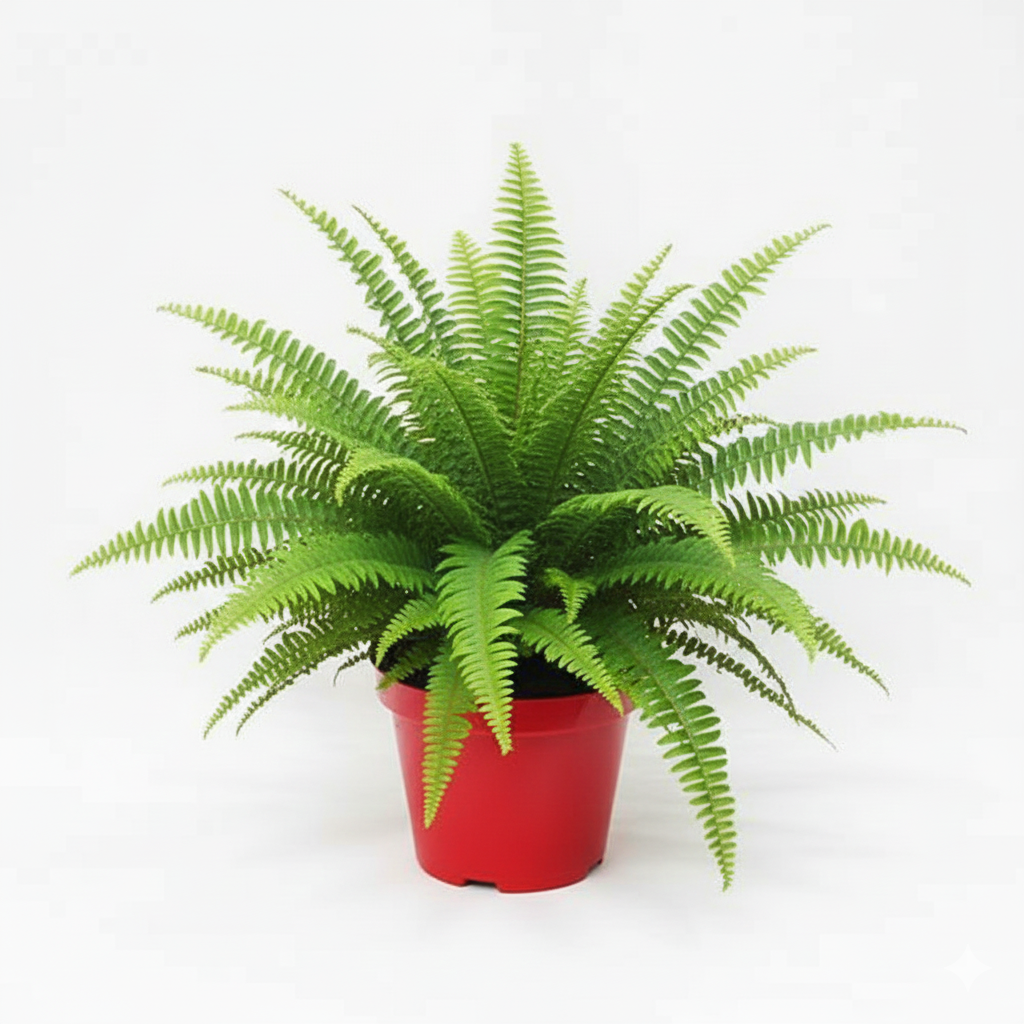
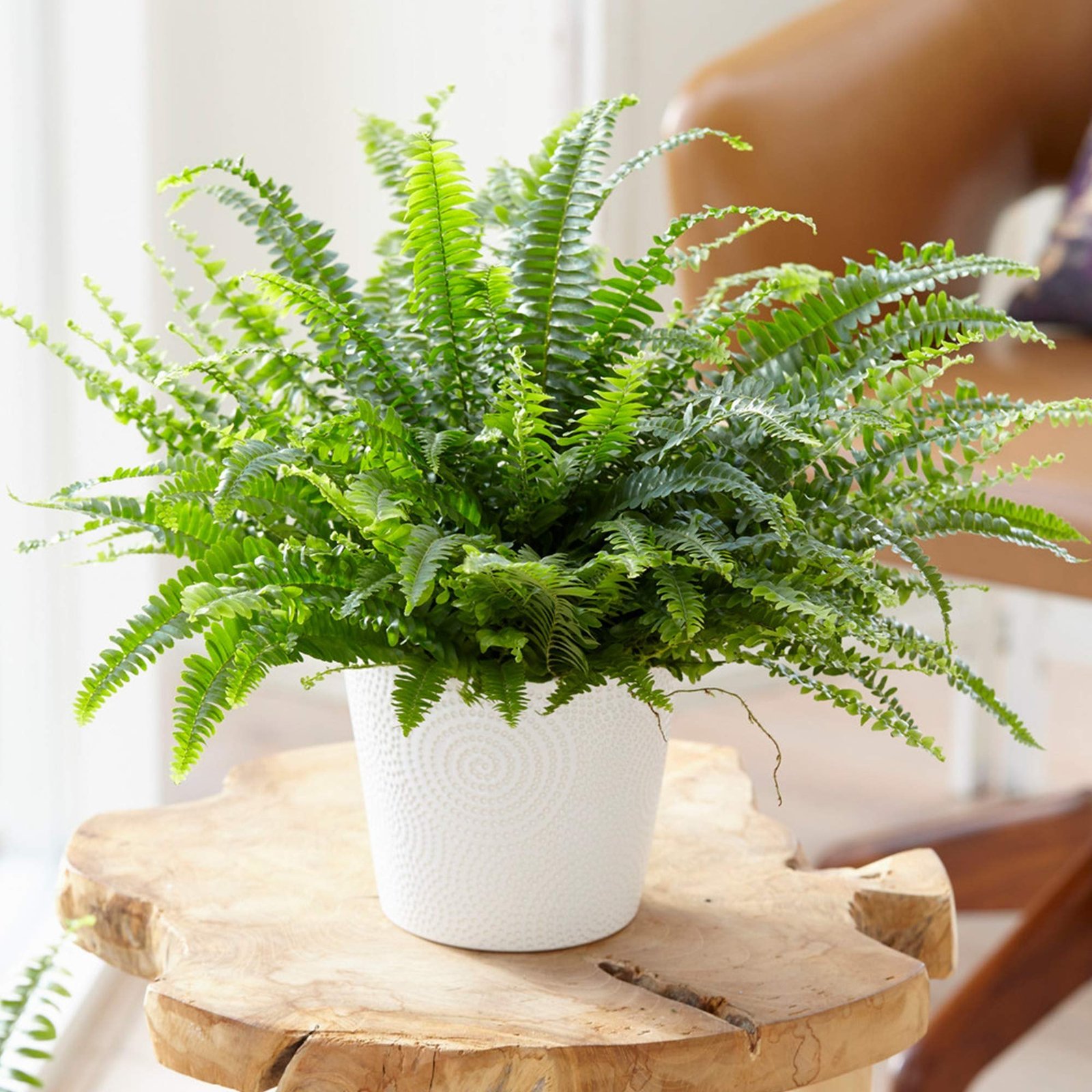
The Boston Fern (Nephrolepis exaltata ‘Bostoniensis’) is a lush, classic indoor plant known for its graceful, arching fronds. It’s a bit finicky but thrives beautifully once you understand its needs.
🌱 Boston Fern Indoor Care Guide
1. Light
- Needs: Bright, indirect light — ideally near an east- or north-facing window.
- Avoid: Direct sunlight (can scorch leaves) and dark corners (leads to sparse growth).
- Tip: Filter harsh light with a sheer curtain if placed near a sunny window.
2. Temperature & Humidity
- Ideal Temperature: 60–75°F (16–24°C).
- Avoid: Cold drafts, AC vents, or heat sources — Boston ferns are sensitive to temperature swings.
- Humidity: High humidity (≥ 50%) is essential!
- Use a humidifier, pebble tray, or place in a bathroom with bright light.
- Mist daily in dry climates (especially in winter).
3. Watering
- Keep soil: Consistently moist, never soggy or bone dry.
- Check soil: Water when the top ½–1 inch feels dry.
- Best method: Water thoroughly until it drains out of the bottom, then empty saucer.
- Tip: Reduce watering slightly in winter, but never let soil dry completely.
4. Soil
- Type: Light, rich, well-draining mix.
- Mix 2 parts peat moss or coco coir, 1 part perlite, 1 part pine bark or compost.
- pH: Slightly acidic (5.0–6.5).
5. Fertilizer
- When: Every 4 weeks during spring and summer.
- Type: Diluted balanced liquid fertilizer (e.g., 10-10-10) at half strength.
- Winter: Stop fertilizing when growth slows.
6. Pruning
- Remove yellow or brown fronds regularly.
- Trim back old, dry fronds to encourage fresh growth.
- Use clean scissors and prune in spring if it looks overgrown.
7. Repotting
- When: Every 1–2 years, in spring.
- Signs: Roots poking out of drainage holes, fronds yellowing, or slow growth.
- How: Move to a pot just 1–2 inches larger. Avoid oversized pots (they stay too wet).


Reviews
There are no reviews yet.