

🌿 General Overview
- Scientific name: Piper betle
- Common name: Banarasi Betel Leaf / Banarasi Paan
- Family: Piperaceae
- Origin: Varanasi and surrounding districts (like Chandauli, Mirzapur, and Ghazipur)
- Type: Tropical perennial vine
🍃 Distinctive Features of Banarasi Betel Leaf
| Feature | Description |
|---|---|
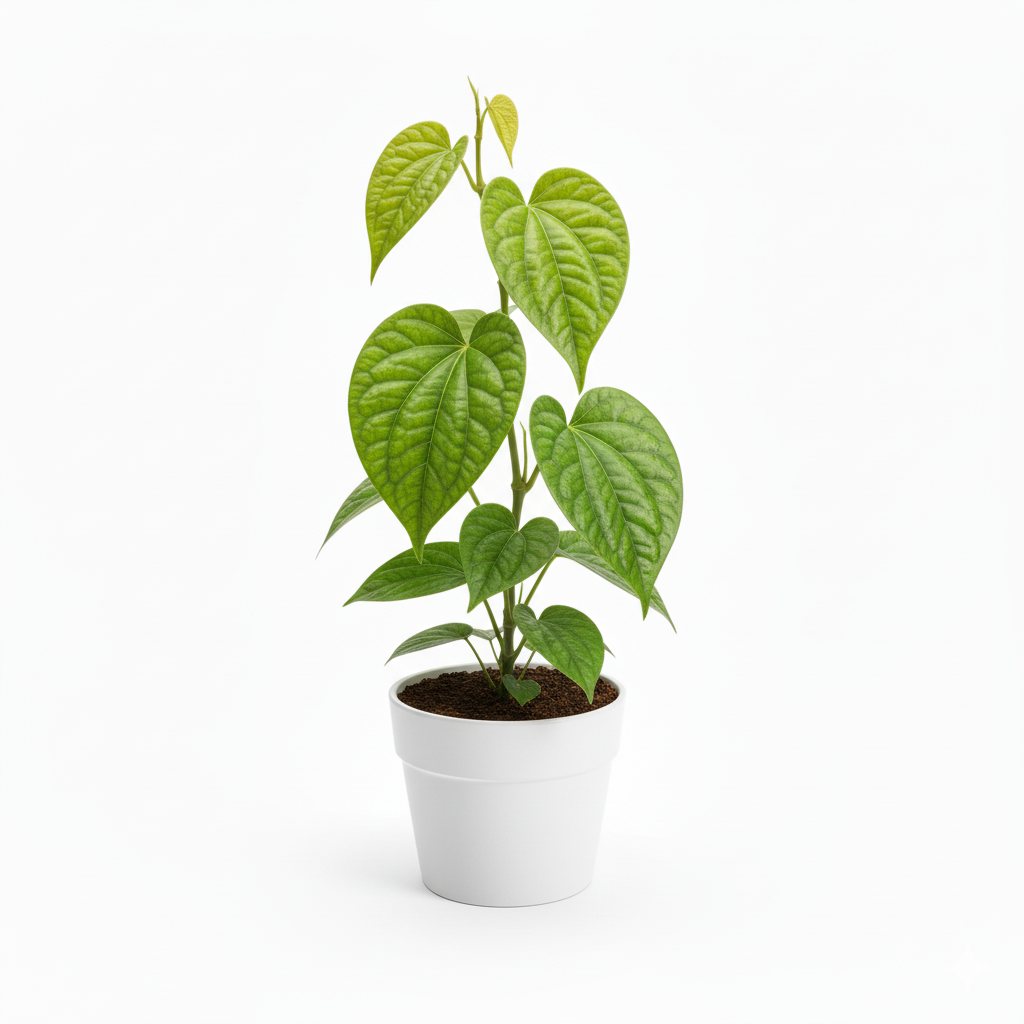
| Shape | Heart-shaped, broad with a smooth, glossy surface |
| Color | Deep green with a shiny texture |
| Taste | Mildly pungent and aromatic, slightly sweet aftertaste |
| Aroma | Strong and pleasant fragrance |
| Texture | Soft and thin, ideal for folding into paan preparations |
| Specialty | Often used for “Meetha Paan” and ceremonial offerings |
🏡 Growing Conditions
- Climate: Warm and humid, typical of tropical and subtropical regions.
- Temperature: Best between 20°C–35°C. Sensitive to frost and cold winds.
- Light: Requires partial shade; direct sunlight can scorch the leaves.
- Soil: Fertile, well-drained loamy soil rich in organic matter; pH 6–7.
- Water: Regular watering to maintain moisture, but avoid waterlogging.
🌱 Propagation & Cultivation
- Propagation: By stem cuttings (~20–25 cm long, with 3–4 nodes).
- Planting time: Monsoon or early spring.
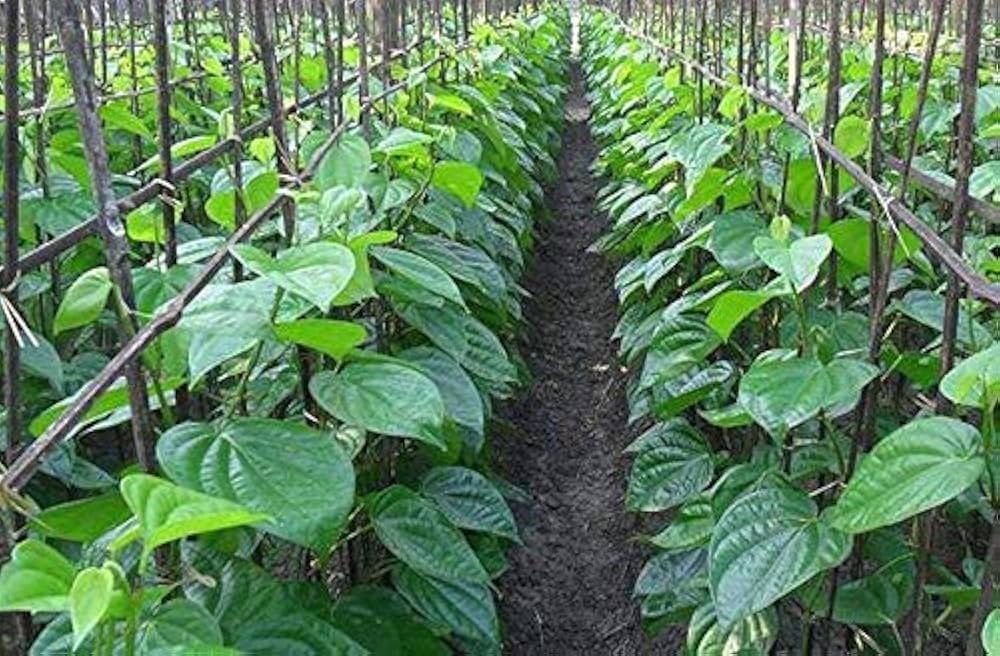
- Spacing: Around 45–60 cm between plants in traditional boroj (betel vine huts).
- Support: Requires bamboo trellises or ropes to climb.
- Mulching: Helps retain soil moisture and prevent weeds.
🌾 Traditional Cultivation (Boroj System)
In Banaras, the vines are grown inside a “boroj”, a thatched enclosure made of bamboo, straw, and leaves that:
- Provides controlled shade and humidity.
- Protects plants from wind and cold.
- Allows for regular irrigation and pruning.
💧 Care and Maintenance
- Watering: Keep soil moist but not soggy.
- Pruning: Regularly trim to encourage lateral growth.
- Fertilization: Apply organic manure (cow dung compost, neem cake) every 30–45 days.
- Pests: Watch for aphids, mealybugs, and fungal leaf spots — neem oil spray works well as a natural remedy.
🌸 Cultural and Economic Importance
- Banarasi paan is a symbol of hospitality and tradition in North India.
- Commonly used in weddings, rituals, and after meals as a mouth freshener.
- Its leaves contain essential oils with mild antiseptic and digestive properties.


Reviews
There are no reviews yet.