

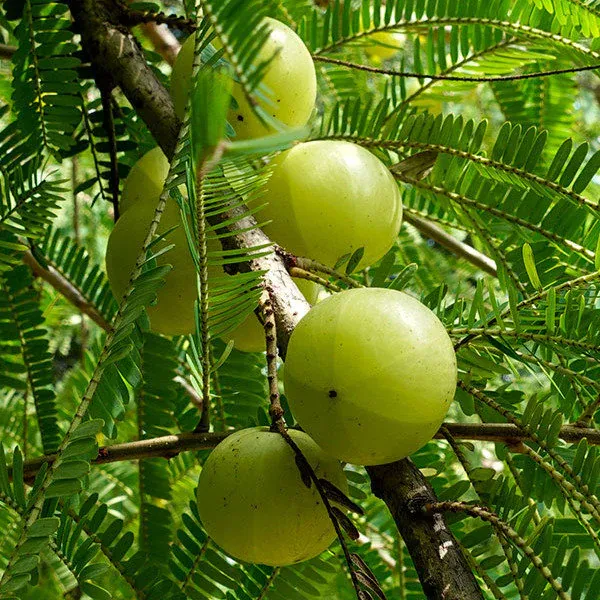
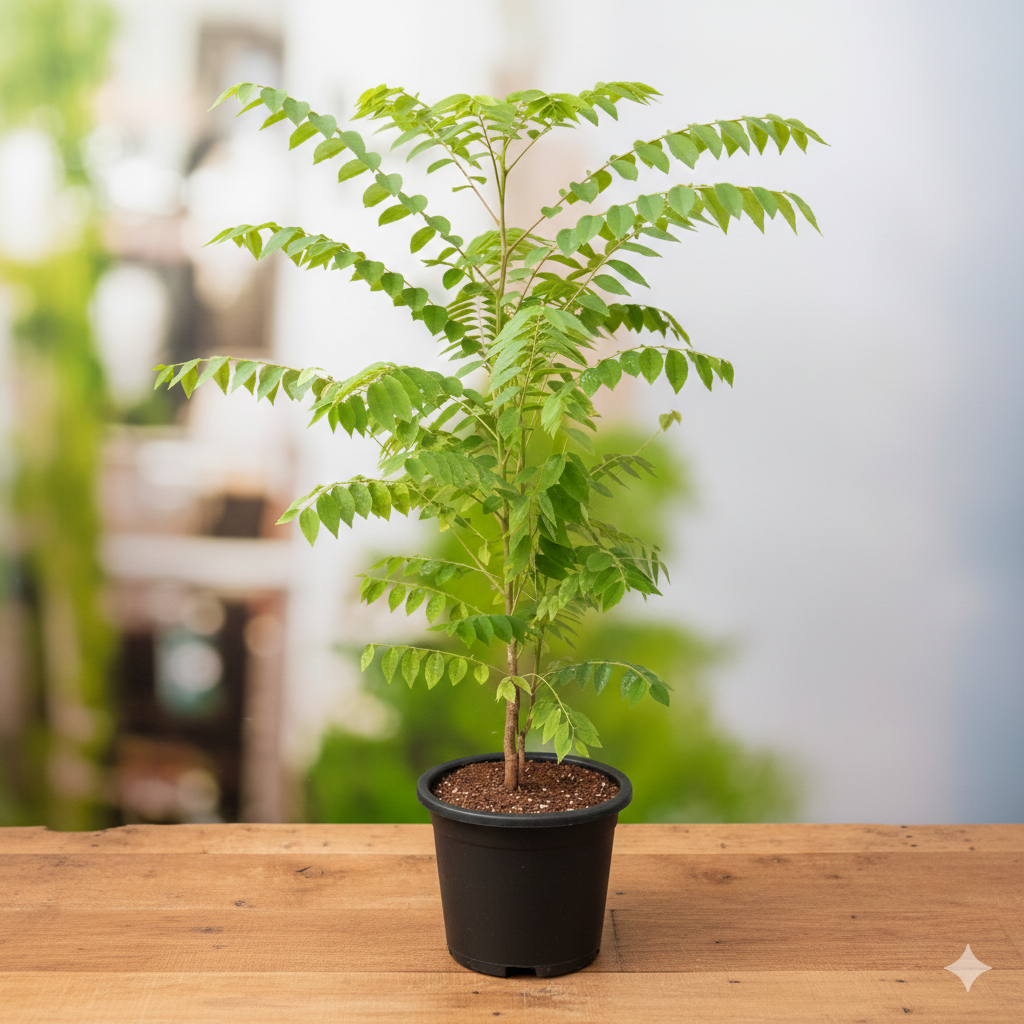
Amla (Indian gooseberry) grows well in pots if you give it enough space, sun, and proper care.
1. Choosing the Right Pot
- Size:
- Start with 12–14 inch pot for a small sapling
- Final pot should be 18–24 inches wide & deep
- Material: Clay or cement pots are best (they stay cool)
- Drainage: Must have 3–5 drainage holes
2. Best Soil Mix for Amla
Amla likes well-draining, slightly sandy soil.
Ideal potting mix:
- 40% garden soil
- 30% compost or well-rotted cow dung
- 20% river sand
- 10% coco peat or leaf compost
👉 Mix in:
- 1–2 tablespoons neem cake
- A handful of bone meal or rock phosphate (optional)
3. How to Pot the Amla Plant
- Cover drainage holes with stones or broken pot pieces
- Fill the pot halfway with soil mix
- Place the amla plant upright (don’t bury the stem deeply)
- Fill remaining soil and gently press
- Water thoroughly until water drains out
- Keep in partial shade for 7–10 days, then move to full sun
4. Sunlight Requirement ☀️
- Needs 6–8 hours of direct sunlight daily
- Place on terrace, balcony, or garden with full sun exposure
5. Watering Schedule 💧
- Young plant: Water every 2–3 days
- Established plant: Water once soil top 2 inches are dry
- Avoid waterlogging (root rot risk)
👉 In winter, reduce watering
👉 In summer, water more frequently but lightly
6. Fertilizing Amla Plant 🌿
- Every 30–40 days, add:
- 2–3 handfuls of compost or cow dung manure
- Every 2–3 months:
- Neem cake or vermicompost
- Avoid chemical fertilizers for better fruit quality
7. Pruning & Training ✂️
- Prune lightly in late winter
- Remove:
- Dry branches
- Crossing or weak shoots
- Helps better air circulation and fruiting
8. Flowering & Fruiting 🍈
- Flowers appear in spring
- Fruits form by monsoon
- Pot-grown amla usually fruits in 2–3 years


Reviews
There are no reviews yet.