


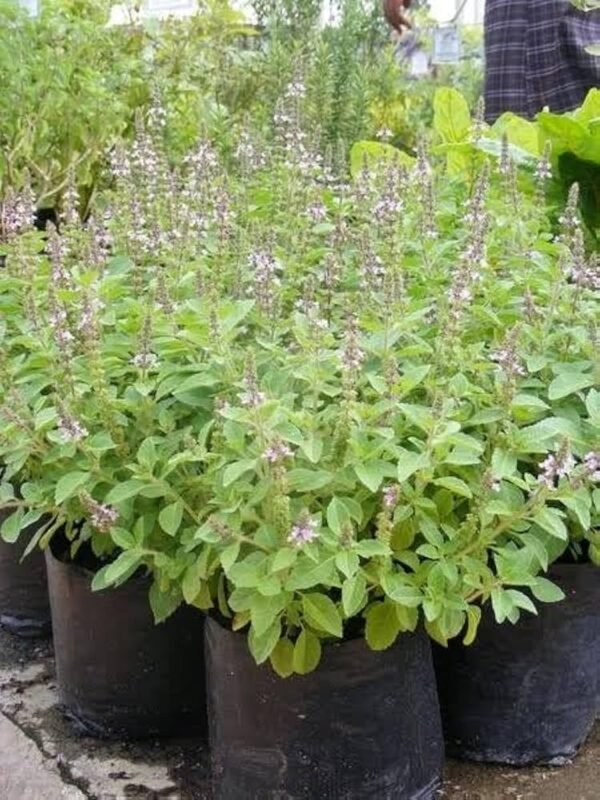
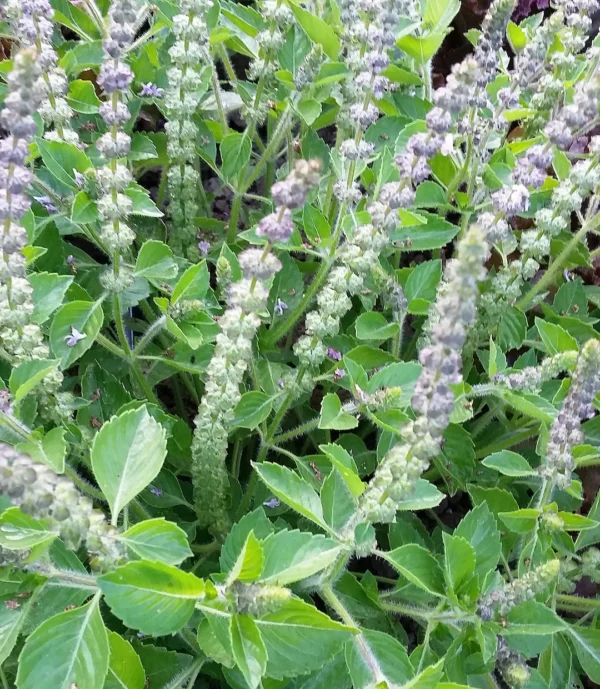
Kapoor tulsi is a type of holy basil (Tulsi) that is very aromatic, easy to grow, and widely used for puja, tea, and Ayurveda.
What Kapoor Tulsi Is
-
Botanical: A compact variety of holy basil, usually classified under species like Ocimum tenuiflorum or closely related types.
-
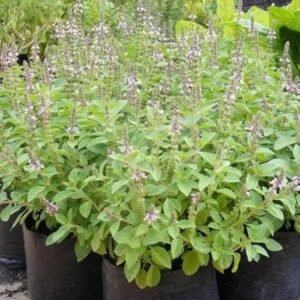
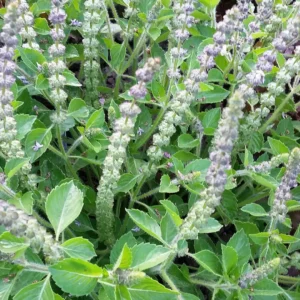
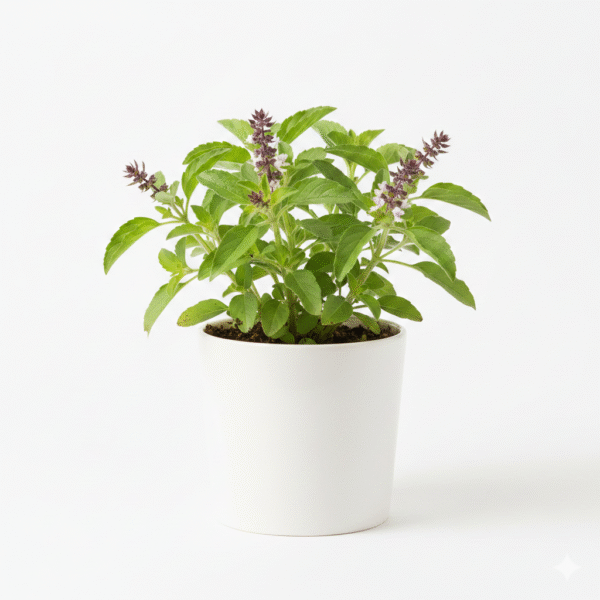
Features: Small to medium green leaves, strong sweet–spicy fragrance (sometimes described as bubble‑gum/clove/coffee‑like), and many purple flowers that attract bees and butterflies.
-
Uses: Commonly used for herbal tea, stress support (adaptogenic herb), immunity support in traditional Ayurveda, and in Indian/Thai cooking.
Growing Conditions
-
Sunlight: Needs at least 4–6 hours of direct sun; can tolerate full sun to partial shade.
-
Soil: Well‑draining, moderately rich, consistently moist soil; avoid waterlogging.
-
Temperature: Warm climate plant; grows best around 20–35 °C and is very sensitive to frost.
-
Lifespan: Grown as an annual in most climates, though holy basil is naturally a perennial in frost‑free tropical/subtropical regions.
Watering and Care
-
Water: Typically every other day or when topsoil is dry; adjust according to heat and pot size, always avoiding standing water.
-
Pruning: Regularly pinch or cut the tips to make the plant bushier and delay flowering; frequent harvesting encourages more leaves
-
Fertilizer: Light monthly feeding with organic compost or liquid organic fertilizer during the main growing season is sufficient.
Benefits and Uses at Home
-
traditional: Known in Ayurveda for antioxidant, antibacterial, and anti‑inflammatory properties, and used for colds, stress, and general wellness (usually as tea or leaf infusions)
-
Culinary: Fresh leaves can be used in herbal teas and some dishes for a spicy, clove‑like basil flavor.
-
Other: Considered sacred in Hindu homes, often kept near the entrance or in a courtyard, and also valued as an air‑purifying, fragrant houseplant.






Reviews
There are no reviews yet.