

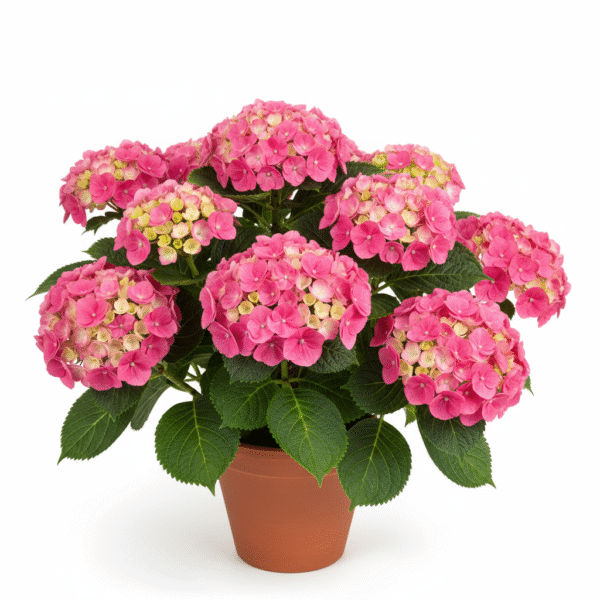
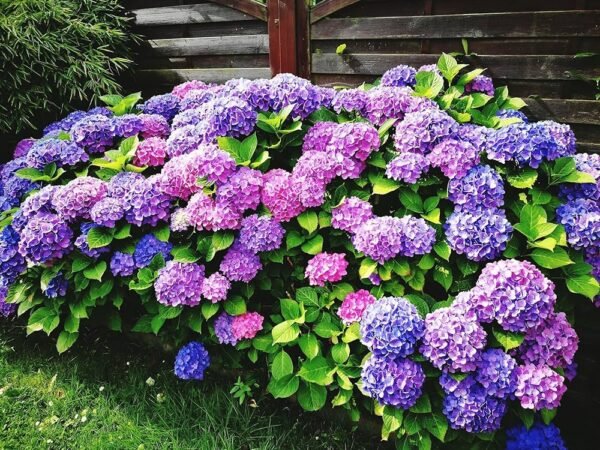
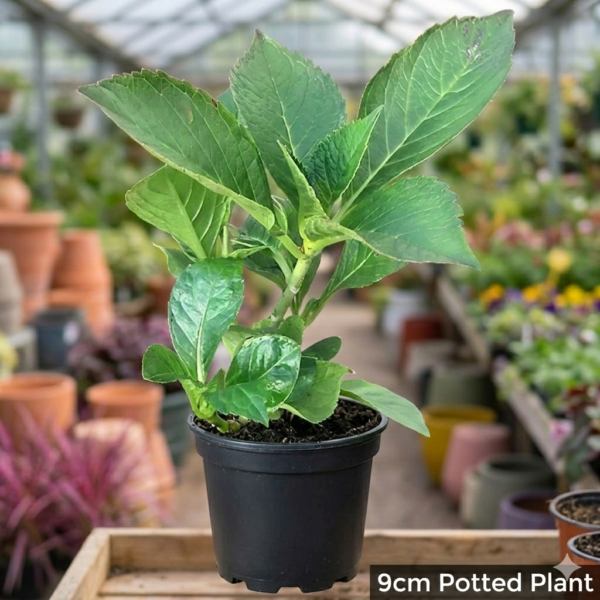
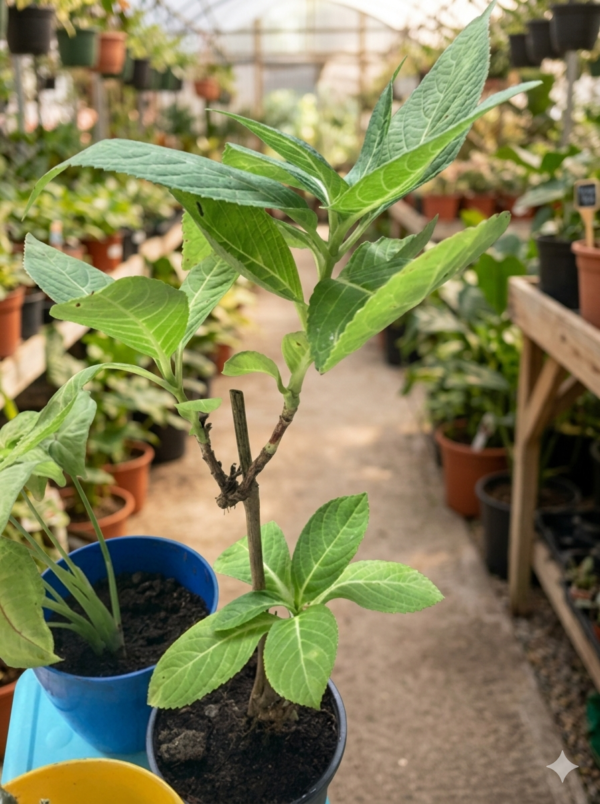
🌿 1. About the Plant
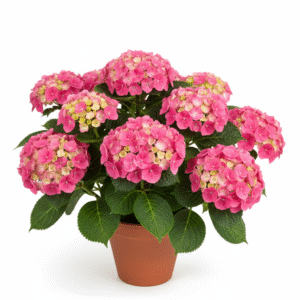
- Botanical name: Hydrangea macrophylla (most common type)
- Common names: Hydrangea, Hortensia
- Type: Perennial shrub
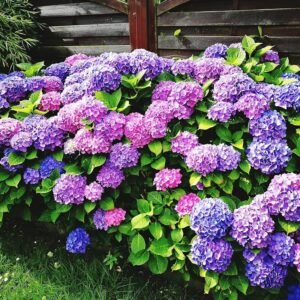
- Flower colors: Blue, pink, white, purple, or green (depending on soil)
🌞 2. Sunlight
- Needs bright, indirect light or morning sunlight + afternoon shade.
- Too much harsh sun = wilted leaves.
- Too much shade = fewer flowers.
✅ Best: Partial sun (3–4 hours of gentle sun daily)
🌾 3. Soil
- Prefers rich, well-draining soil with plenty of organic matter.
- Add compost or leaf mold before planting.
🌈 Color Tip (for blue or pink blooms):
| Flower Color | Soil Type | How to Achieve |
|---|---|---|
| Blue | Acidic (pH < 6) | Add alum, pine needles, or coffee grounds |
| Pink | Alkaline (pH > 7) | Add lime or wood ash to soil |
💧 4. Watering
- Hydrangeas love moist soil — water deeply 2–3 times a week, more in hot weather.
- Don’t let the soil dry out completely, but avoid waterlogging.
- Morning watering is best.
🪴 5. Potting / Planting
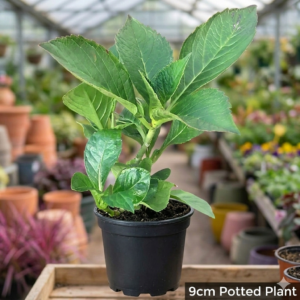
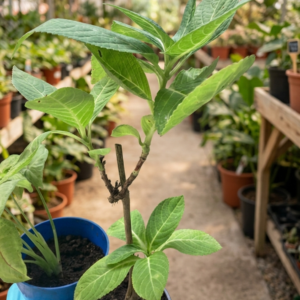
- Use a large pot (at least 12–16 inches wide) with drainage holes.
- In gardens, plant in slightly raised beds to prevent water stagnation.
🍀 6. Fertilizing
- Feed every 2–3 weeks during spring and summer using:
- Balanced fertilizer (10-10-10) for healthy leaves and blooms, or
- Organic compost for gentle feeding.
- Stop feeding during winter dormancy.
✂️ 7. Pruning
- Old wood varieties (common hydrangeas):
Prune after flowering (summer) to remove spent blooms and shape. - New wood varieties (e.g., Hydrangea paniculata):
Prune in late winter or early spring to encourage new growth.
🌸 8. Flowering Season
- Blooms from spring through late autumn.
- Flowers last several weeks and can be dried for decoration.





Reviews
There are no reviews yet.