

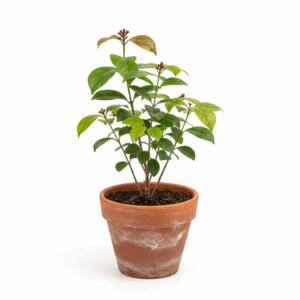
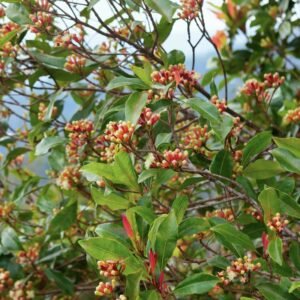
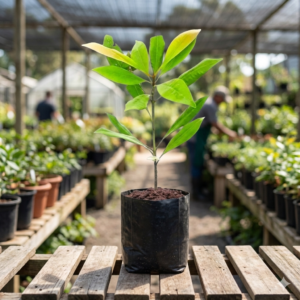
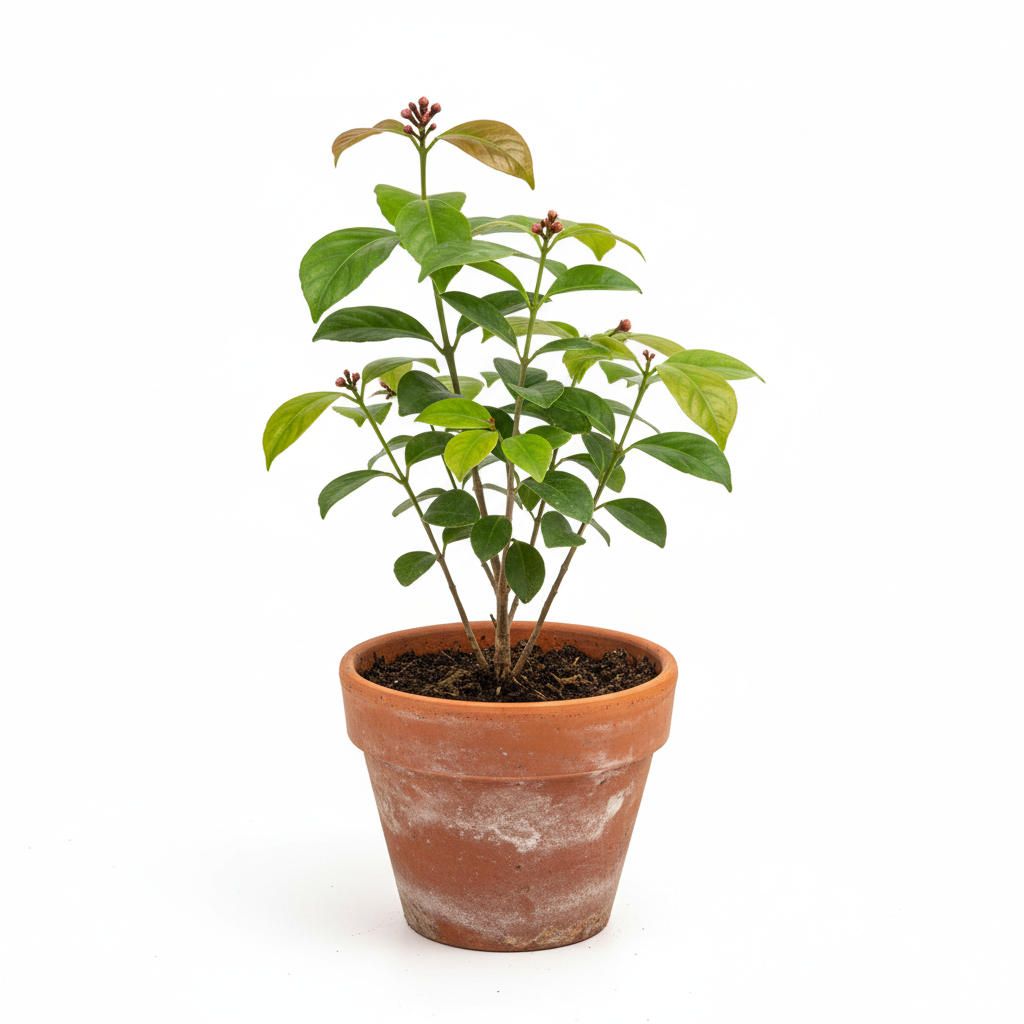
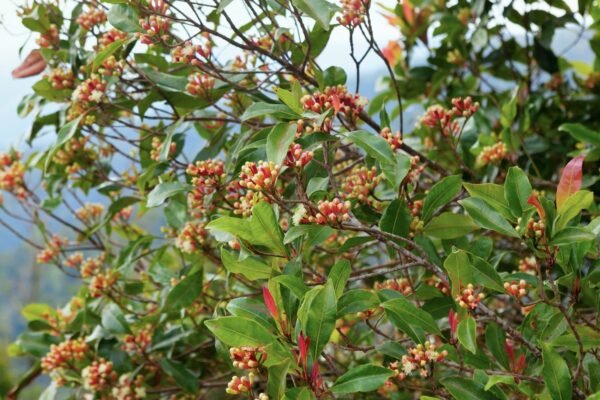
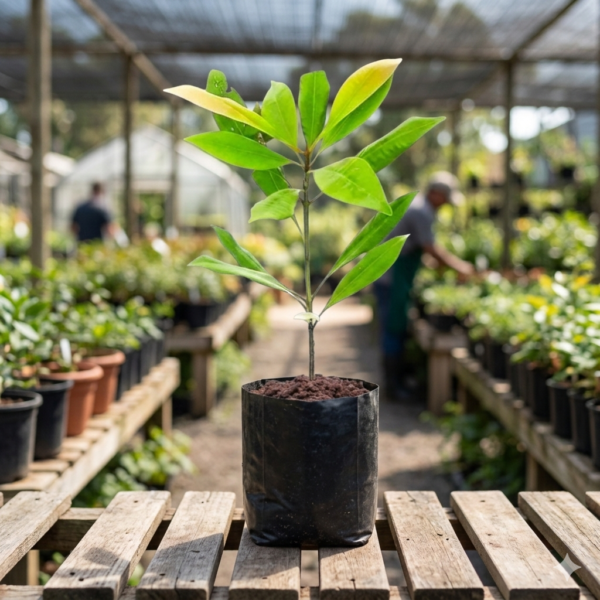
Caring for a clove plant (Syzygium aromaticum) takes patience — it’s a beautiful but slow-growing tropical evergreen tree that eventually produces the dried flower buds we know as “cloves.” 🌿
🌱 Basic Overview
- Botanical Name: Syzygium aromaticum
- Type: Tropical evergreen tree
- Height: Up to 8–12 m in nature, but smaller (1–2 m) in pots
- Native: Indonesia (the Maluku Islands / Spice Islands)
- Lifespan: Long-lived; begins flowering after 4–6 years
🌞 Light Requirements
- Needs bright, indirect sunlight.
- Can tolerate partial shade — ideal for tropical or humid climates.
- Avoid harsh afternoon sun (especially for young plants in pots).
💡 Tip: If grown indoors, place near an east or south-facing window where it gets filtered sunlight.
🌡️ Temperature & Humidity
- Thrives in warm, humid climates.
- Ideal temperature range: 20–30 °C (68–86 °F).
- It’s not frost-tolerant — bring it indoors or protect it if temperatures drop below 15 °C (59 °F).
- Prefers high humidity (60–80%) — mist leaves regularly or use a humidity tray.
🌧️ Watering
- Keep soil consistently moist, but not waterlogged.
- Water when the top 2–3 cm of soil feels dry.
- Reduce watering slightly during cooler months.
- Avoid letting the soil dry completely — clove roots are shallow and delicate.
⚠️ Overwatering can cause root rot — always ensure good drainage.
🌿 Soil Requirements
- Prefers rich, loamy, well-draining soil.
- Ideal pH: 5.5–7.0 (slightly acidic to neutral).
- You can mix:
- 2 parts garden soil
- 1 part compost or aged manure
- 1 part sand or perlite for aeration
🍽️ Fertilizing
- Feed every 2–3 months during the growing season (spring to autumn).
- Use a balanced fertilizer (NPK 10-10-10) or one rich in phosphorus for flower development.
- Organic options: compost tea or diluted fish emulsion.
- Avoid heavy feeding in winter when growth slows.
🪴 Potting & Repotting
- Start in a small pot (6–8 inches) and repot gradually as it grows.
- Ensure good drainage holes.
- Repot every 2–3 years or when roots outgrow the pot.
🌸 Flowering & Harvesting
- Clove plants start flowering after 4–6 years (sometimes longer in pots).
- The flower buds are harvested before they open and then dried to make cloves.
- Each flush of flowers can produce hundreds of buds if the tree is mature and healthy.
✂️ Pruning
- Lightly prune to shape the plant and encourage bushier growth.
- Remove dead or weak branches after the growing season.
- Avoid heavy pruning; it can delay flowering.
🪲 Common Problems & Pests
| Problem | Cause | Solution |
|---|---|---|
| Yellowing leaves | Overwatering or poor drainage | Let soil dry slightly; improve drainage |
| Leaf drop | Low humidity or sudden temperature change | Mist regularly, avoid drafts |
| Slow growth | Nutrient deficiency | Add compost or balanced fertilizer |
| Scale insects or aphids | Common on indoor plants | Spray neem oil or insecticidal soap weekly until gone |
🌼 Propagation
- Usually grown from fresh seeds, as clove seeds lose viability quickly.
- Steps:
- Use fresh, ripe clove fruits (remove the outer pulp).
- Soak seeds overnight in water.
- Plant in a moist, shaded seedbed or pot with rich soil.
- Keep warm and humid; germination takes 2–4 weeks.
- Transplant seedlings when 6–8 inches tall.






Reviews
There are no reviews yet.