

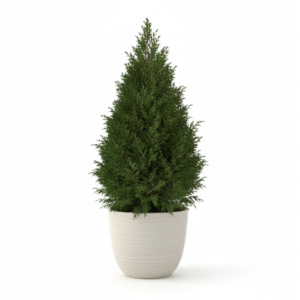
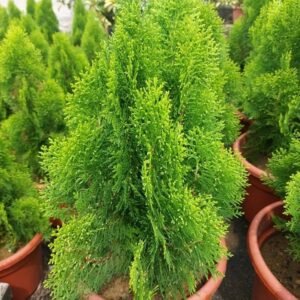
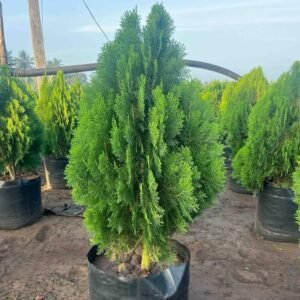
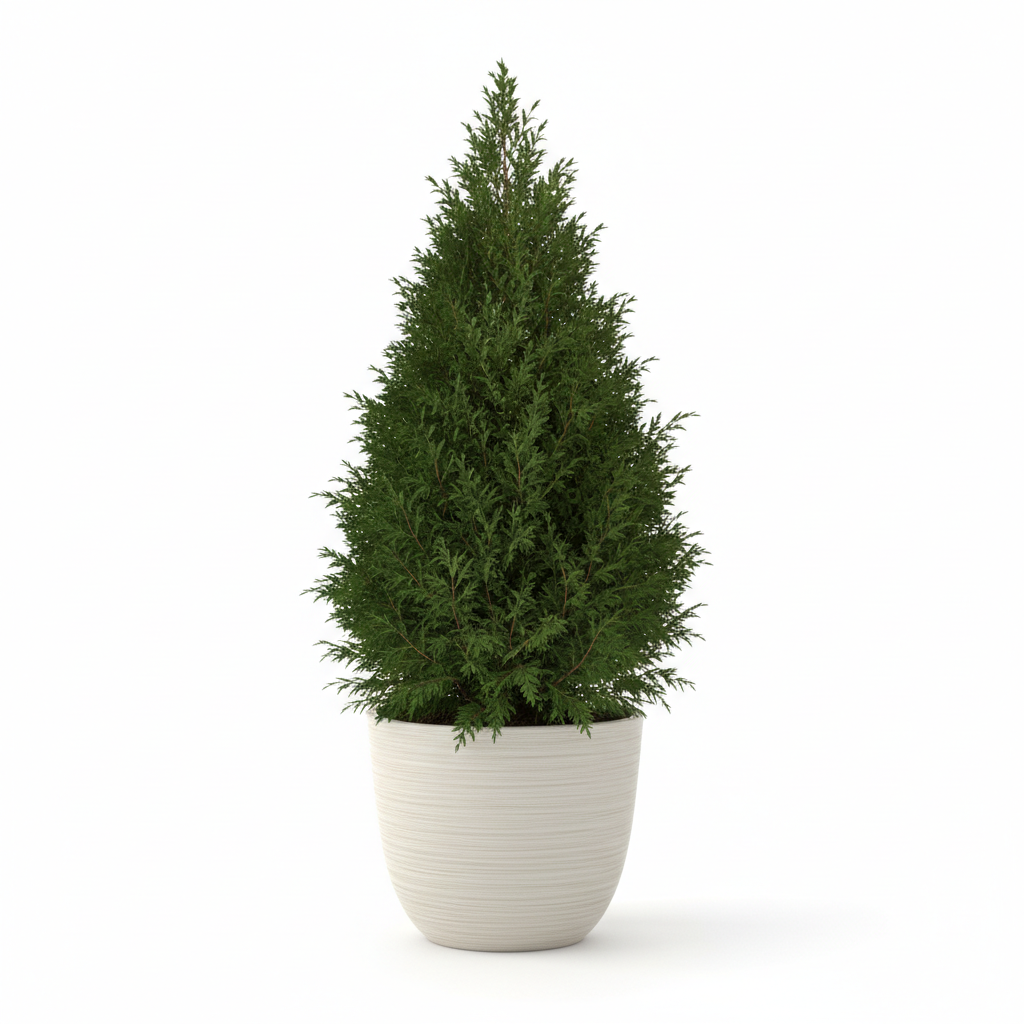
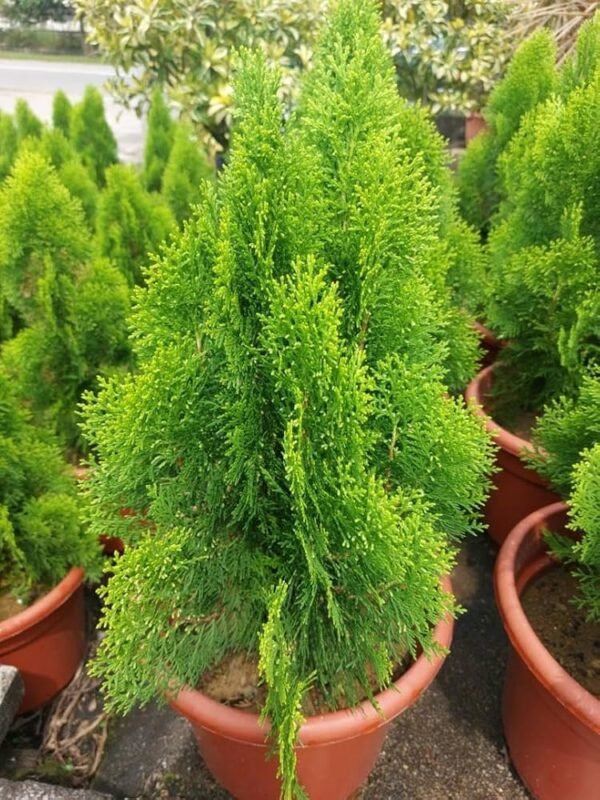
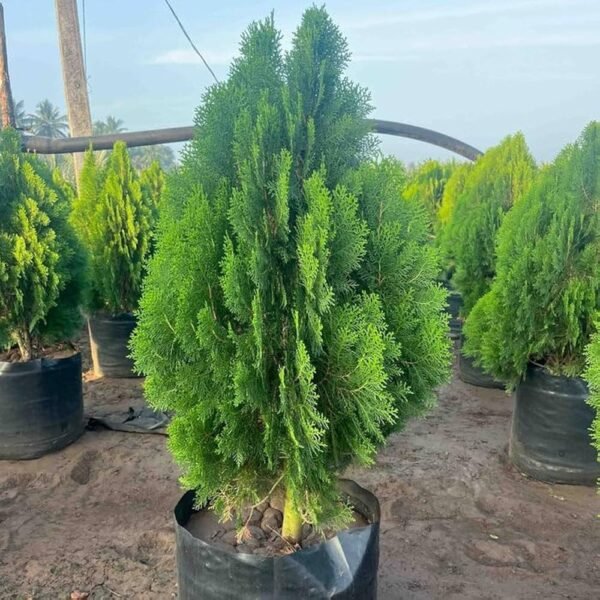
Caring for and growing a Thuja plant (Arborvitae) indoors is definitely possible — especially with dwarf or compact varieties — but it does require a bit of attention since Thuja naturally prefers outdoor conditions.
🌿 1. Choose the Right Variety
For indoor growing, pick a dwarf or compact Thuja, such as:
- Thuja occidentalis ‘Danica’ (small, globe shape)
- Thuja occidentalis ‘Smaragd’ (Emerald Green Arborvitae) – slow-growing and tidy
- Thuja plicata ‘Atrovirens’ – tolerates low light a bit better
These varieties are easier to manage indoors and won’t quickly outgrow your pot.
☀️ 2. Light Requirements
- Needs bright, indirect sunlight. Place it near a south- or west-facing window where it can get at least 6 hours of light daily.
- If natural light is weak, use a full-spectrum grow light for 10–12 hours per day.
- Rotate the pot every week to keep even growth.
💧 3. Watering
- Thuja prefers consistently moist (but not soggy) soil.
- Water when the top 2–3 cm (1 inch) of soil feels dry.
- Make sure your pot has good drainage holes — standing water can lead to root rot.
- In winter, water less often but don’t let it dry out completely.
Tip: Mist the foliage occasionally or place a humidity tray nearby to prevent brown tips in dry indoor air.
🌱 4. Soil
- Use well-draining potting soil — a mix of:
- 2 parts peat or coco coir
- 1 part perlite or sand
- 1 part compost or pine bark
- pH should be slightly acidic to neutral (6.0–7.5).
🌡️ 5. Temperature and Humidity
- Ideal temperature: 15–25°C (59–77°F).
- Avoid placing near heaters, air conditioners, or cold drafts.
- Likes moderate humidity — 40–60%.
🌾 6. Fertilizing
- Feed once a month in spring and summer with a balanced, slow-release fertilizer (e.g., 10-10-10).
- Stop fertilizing during fall and winter when growth slows down.
✂️ 7. Pruning & Maintenance
- Lightly trim to shape in spring or early summer.
- Remove brown or dead tips to encourage new growth.
- Avoid heavy pruning into old wood — Thuja may not regrow from that.
🪴 8. Repotting
- Repot every 2–3 years or when roots start to fill the pot.
- Move to a pot 1 size larger with fresh soil.
- Best time: early spring.





Reviews
There are no reviews yet.