

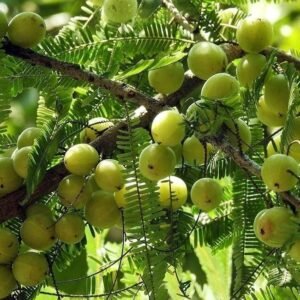
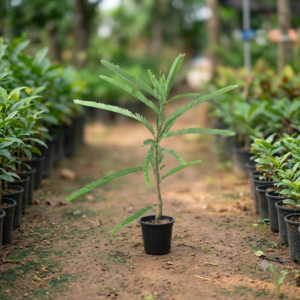
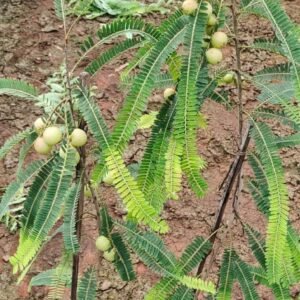
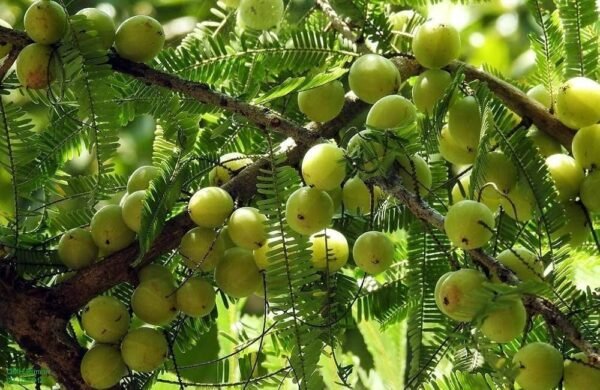
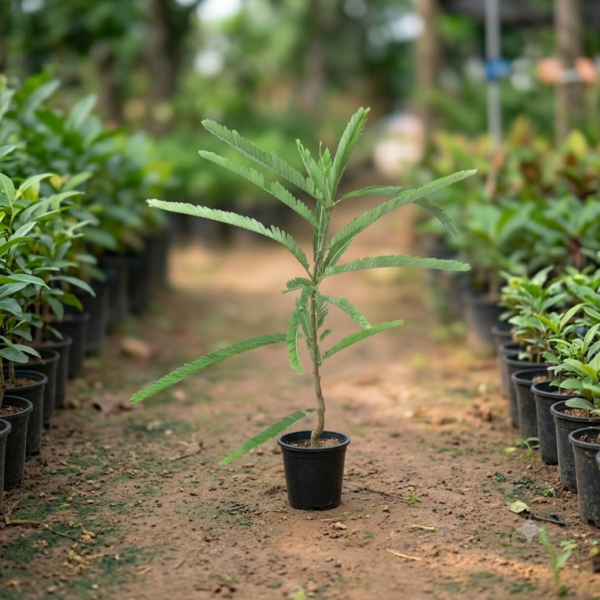
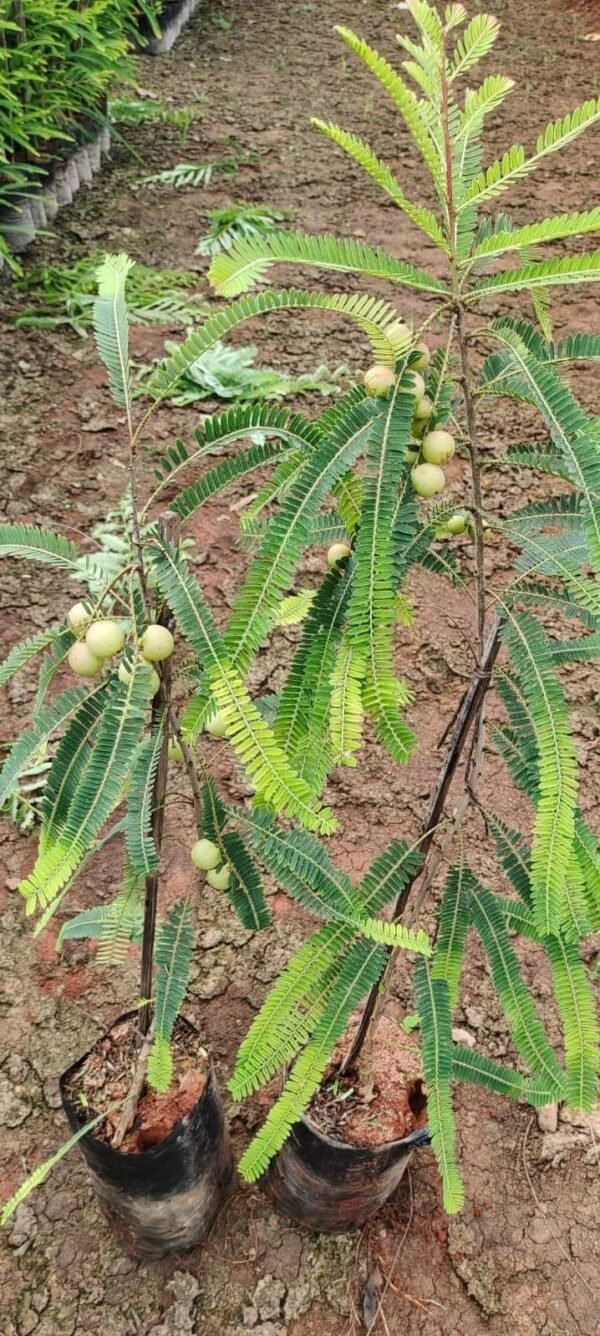
A grafted amla plant grows faster and usually starts fruiting in 2–4 years, much earlier than seed-grown plants.
1. Sunlight (Most Important)
- Provide 6–8 hours of direct sunlight every day.
- Full sun promotes healthy growth, flowering, and fruit production.
- Avoid planting in deep shade.
2. Watering
- Water deeply when the top 2–3 inches of soil become dry.
- Keep the soil slightly moist during the first year.
- Once established, water about once every 5–7 days in summer, less during winter.
- Avoid waterlogging, as it can cause root rot.
3. Soil
Amla grows best in well-drained, fertile soil.
For pots, use:
- 40% garden soil
- 30% compost or well-rotted cow manure
- 20% river sand
- 10% cocopeat (optional)
The soil should drain well while retaining some moisture.
4. Pot Size
- Start with a 16–18 inch pot.
- Eventually move it to a 22–24 inch pot if you plan to keep it permanently in a container.
- Ensure the pot has several drainage holes.
5. Fertilizer
Feed every 2–3 months with:
- Well-rotted cow dung or vermicompost (1–2 kg for larger pots), or
- A balanced fruit tree fertilizer according to the label.
Before flowering, adding a fertilizer slightly higher in phosphorus and potassium can support flowering and fruiting.
6. Pruning
- Remove dead, weak, or crossing branches.
- Remove any shoots growing below the graft union, as these come from the rootstock and should not be allowed to grow.
- Light pruning after harvest helps maintain shape.
7. Flowering and Fruiting
- Grafted plants generally flower from late winter to spring, depending on climate and variety.
- Fruits are usually ready during autumn to early winter.






Reviews
There are no reviews yet.