

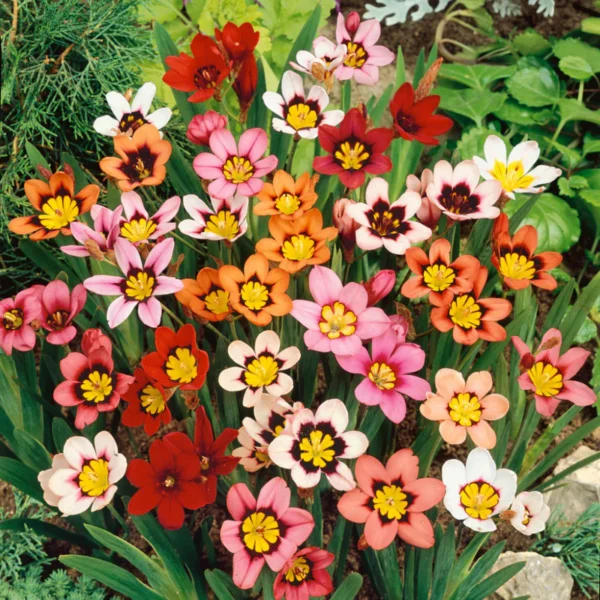
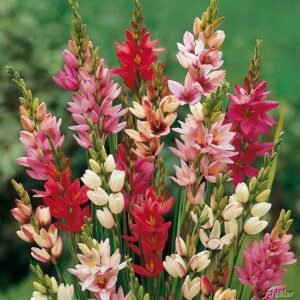
Growing Sparaxis (also called harlequin flower or wandflower) is fairly easy if you provide cool growing conditions during its active season and a dry rest period afterward.
When to plant
- Cool climates: Plant bulbs in autumn (September–November) for spring blooms.
- Warm climates (mild winters): Plant in late autumn to early winter.
- Hot tropical/subtropical areas: Plant during the coolest part of the year. In much of eastern India, late October to December works best.
Choose the right location
- Sunlight: Full sun (at least 6 hours daily).
- Soil: Well-drained sandy or loamy soil. Avoid waterlogged ground, as bulbs rot easily.
- pH: Slightly acidic to neutral (about 6.0–7.0).
How to plant
- Loosen the soil and mix in compost.
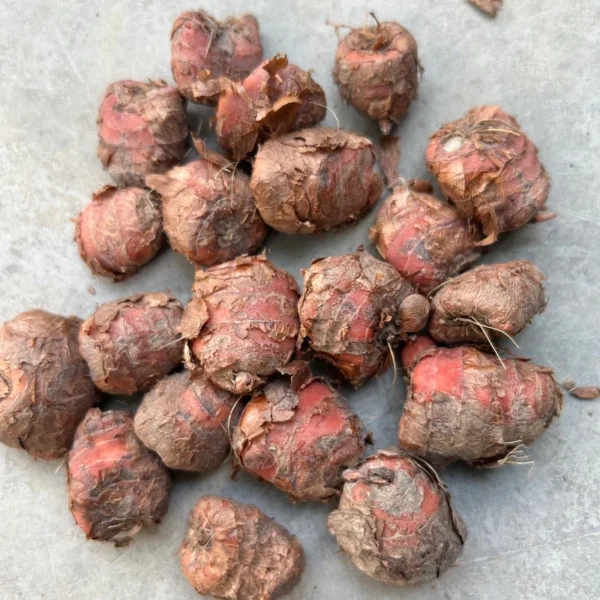
- Plant bulbs with the pointed end facing up.
- Plant 5–8 cm (2–3 inches) deep.
- Space bulbs 5–10 cm (2–4 inches) apart.
- Water thoroughly after planting.
Watering
- Keep the soil slightly moist while the plant is growing.
- Don’t overwater.
- After flowering, allow the foliage to yellow naturally, then gradually stop watering so the bulbs can go dormant.
Fertilizer
- Apply a balanced fertilizer (such as 10-10-10 or a similar NPK) when shoots emerge.
- Feed once more just before flowering.
- Avoid excessive nitrogen, which encourages leaves instead of flowers.
Temperature
- Ideal growing temperatures: 10–20°C (50–68°F).
- Sparaxis dislikes prolonged heat. In very hot regions, afternoon shade can help.
After flowering
- Let the leaves die back naturally.
- In areas with wet summers, lift the bulbs after the foliage dries, clean them, and store them in a cool, dry place until the next planting season.
- In regions with dry summers, bulbs can often remain in the ground.
Growing in pots
Sparaxis performs very well in containers:
- Use a pot at least 20 cm (8 inches) deep with drainage holes.
- Fill with a free-draining potting mix.
- Plant several bulbs together for a fuller display.







Reviews
There are no reviews yet.