



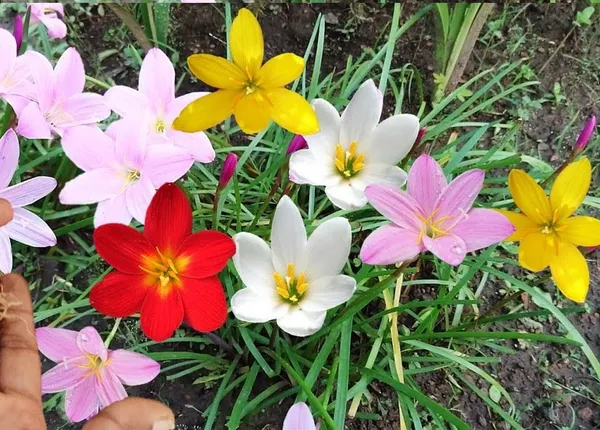
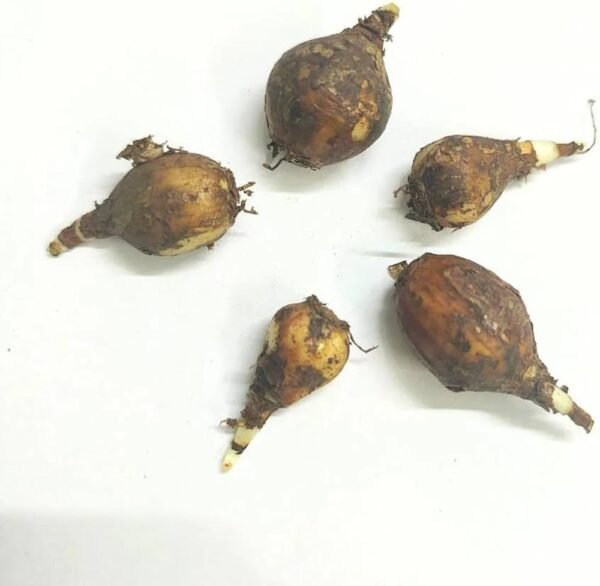
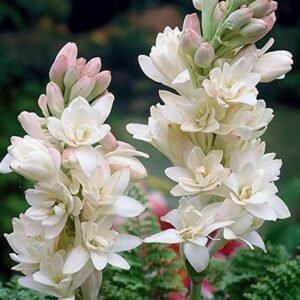
Rain lily (Rain lily) is one of the easiest bulbous plants to grow. It produces flowers after periods of rain or thorough watering, which is how it got its name.
Here’s how to grow rain lily bulbs successfully:
1. Choose the right location
- Provide full sun to partial shade.
- Aim for 4–6 hours of sunlight daily for the best flowering.
2. Plant the bulbs
- Plant with the pointed end facing up.
- Place bulbs about 2–5 cm (1–2 inches) deep.
- Space them 7–10 cm (3–4 inches) apart.
- Plant several bulbs together for a fuller display.
3. Use well-draining soil
A good mix is:
- 50% garden soil
- 25% compost or well-rotted manure
- 25% coarse sand or perlite
Avoid heavy, waterlogged soil, as bulbs can rot.
4. Watering
- Water well after planting.
- Keep the soil slightly moist while the plant is actively growing.
- During dormancy (usually in cooler or very dry periods), reduce watering.
- A deep watering after a dry spell often triggers blooming.
5. Fertilizer
Feed every 4–6 weeks during the growing season with:
- A balanced fertilizer (such as 10-10-10), or
- Compost.
Avoid excessive nitrogen, which encourages leaves instead of flowers.
6. Temperature
- Best growth occurs between 20–30°C (68–86°F).
- In areas with mild winters, bulbs can stay in the ground year-round.
- In regions with freezing winters, dig up and store the bulbs after the foliage dies back.
7. Flowering
- Most rain lilies bloom during the rainy season or after heavy watering.
- Flowers usually last 2–3 days, but the plant produces multiple blooms over several weeks.





Reviews
There are no reviews yet.